
Relax, don't do it
Relax, Song: Frankie Goes to Hollywood ‧ 1984
When you want to go to it
Relax, don't do it
When you want to come (to Kenya)
Don't do this.
Seriously, don't. There are plenty of places in the world where you can go on a bike and have fun. If you want a bit of Africa and road or gravel riding, go to Rwanda. Unless you ride an MTB or a very wide tire in gravelThen head over to bikepacking.com and read about the carefully crafted route: Kenya Bike OdysseyJust be prepared to call people whose land you'll be passing through. To illustrate the paved road situation in the northern (more wild) part of Kenya, I'll use my own statistics. There are two paved roads... on an area 750km wide and 400km long. And where there's no paved road, the roads are off-road and very likely cross private land. My route (if its very rough outline can even be called a "planned route") doesn't include cycling. crème de la crème country. Its goal is more: a little bit of everything – good, bad, none. And it succeeds in 100%. Well, maybe in 90, because I avoid the north of the country, boldly assuming that I saw those regions on the occasion visits to EthiopiaComparing my photos and those from the Kenyan Odyssey, I can honestly say it was a good idea.
Don't get me wrong, it was hard, but I enjoyed it. But you know how it is with people on the internet (me included). History knows the case of two girls and a cup, or one man and a jar – they all looked like they liked it too. That doesn't mean the situation is universally pleasant. So if you're just scrolling through the pictures here and not reading the text, I remind you: I take no responsibility for any decisions made based on the material on this blog. However, if you don't read, and you are scrolling, you will miss this remark anyway.

Here I am, at a boda boda stop in Kenya, in a downpour and 10℃, in the middle of our summer, about 100km as the crow flies from the equator, an hour after cycling among giraffes, zebras, wildebeests, and cows. Around me are mostly scooter riders and workers at the nearby Olkaria geothermal power plant (similar in power to the Rybnik Power Plant, yet relies solely on energy from "hot springs").
I don't know if you're wondering how I ended up in this situation, but I'll gladly share it. Mainly so you don't have to repeat it. Because, like every other day of this trip, it was both wonderful and terrible. No other trip in my life has ever evoked such a powerful emotion in me. love-hate relationship.

Kenya (and part of Tanzania) seemed like the most sensible choice for my first solo bikepacking trip through Africa: lots of tourists, a relatively wealthy country, everyone speaks English. Being able to easily communicate with everyone makes a huge difference. Especially since, despite mutual understanding, conversations can still be complicated due to the complete cultural differences. I feel that traveling alone (or rather, solo) is really conducive to making new contacts – even compared to traveling alone. Kenyans are incredibly friendly – probably the friendliest of anyone I've met: smiling, open, helpful. I spend most of my time smiling and shouting, "jambo!” on the lips.
My name is Maciek and I came here to ride a bike and watch lions and flamingos.
…and I see you've run out of lions and flamingos
At Nairobi Airport, also known colloquially as NaiRoberry, everything is exactly as it should be. No rush, everything takes a long time, everything hakuna matata. I'm reminded of the perception of time among all my African colleagues, which assumes four hours: morning, noon, evening, and night. And I probably had 7,000 colleagues in Kenya before I even got there. Mainly because I posted a few questions on the Facebook group "Cycling Kenya"I may not have learned much, but I had an inbox full of invitations to visit when I passed by. And I also started receiving posts with announcements. It turns out they will be typical"contractor"who shows up spontaneously in the morning to work, for example, unloading containers, earns 15-30 PLN per day. Of course, there is no guarantee that you will be selected from the group.
A hotel driver picked me up from the terminal. I opted for a hotel a bit outside the city, as the prospect of struggling through the capital on my first day didn't seem sensible. Interestingly, the driver didn't want a tip, and no one at the airport asked for any money from me. A welcome change from Addis Ababa, where everyone wanted money for everything (and even nothing). In fact, during my nearly two-week stay, I was asked for money a total of four times. This included one somewhat pushy adult and three random children. That's about 6,500 times less than in the much smaller Rwanda.
These 15 kilometers from the airport generate a well-known thought in my head, from which I have not drawn any conclusions for years:Am I some kind of idiot? Why would anyone want to ride a bike on this road?"This is hardcore like I've never seen. For about 1,500 km on public roads, I didn't see a single traffic light – the only law in force here is the law of the jungle – the law of the strongest.
In the case of a bicycle, it's a classic situation where a car pulls out in front of the cyclist and honks (a courtesy that saves lives, as it could also be approaching from behind) to, politely put, get the hell out of there. Even if the road has been clear for 10km, you see a car on the horizon ahead and one on the horizon behind, and through advanced calculations, you conclude that they'll meet at exactly your height – which is exactly what will happen. Neither will brake; at most, the more polite one will honk to let you know that without escaping, you'll die in the ditch.

A classic car situation looks like this: a single-lane road in both directions. We arrive at a traffic jam (e.g., a town where banana sellers operate a mobile business), with 10 cars in front of us. So we begin an overtaking maneuver on the hard shoulder to squeeze in by a few centimeters at the beginning of the jam. The car behind us does the same, but in the wrong lane—regardless of whether anything is moving in it. If it's smaller, it will escape; if larger, it will honk and force us to join the jam earlier. But that's not the end. Another car from behind, slightly higher in the air, will begin the process of overtaking off-road, and another—a Hilux—will cycle. Everyone will meet at the beginning of the jam and squeeze in front of the others. WHAT TO DO?FUCK?! The strangest thing, though, is the complete lack of aggression in these situations. My drivers' only thought is, "Oh, if only I had a car like that."
Add dust and smog to the mix. Vacations. I can't imagine driving without my rearview mirror glasses. It's also a good thing I grew up on the Babka Roundabout, and nothing in life scares me anymore when it comes to road travel.
Write like this, "You can't live here, you can't live here"
Send Yourself a Postcard, Song: Łona and Webber
Not only is there filth and poverty, but there is also depression
Power doesn't pet you, it rather thinks about how to slaughter you
How about a sidewalk? Crooked, please.
Rain, hail, storms
And rude natives with a cannibalistic nature
Things are also uninteresting for the spirit
Two theaters, one cinema, so I don't even go
The cutlet is served cold in the pub
Lack of greenery, stunted vegetation here and there
Husbands without the slightest chance of changing their fate
Because wives don't iron shirts here
An incredibly boring entertainment program
And this uninspiring landscape, it doesn't help
Apart from that, I'm fine, I'm still going somehow
See you soon, hugs,TadekRustic
I leave my bike case at the PrideInn Plaza Nairobi Airport. I also eat a breakfast there so large, strategically placed that the hotel chain will record a significant loss by the end of the year. Everyone thinks my bag is a hunting weapon and that I'm here for a hunt. I set off on the route in the afternoon. Before leaving, I ask the receptionist what's up with the black clouds in the sky and if I thought it was raining late in the evening. The nice lady replies that they haven't seen rain here in a month. This is one of a thousand lies (though probably unconscious or well-intentioned) I've heard this week. From the very start, I feel like a downpour is chasing me, and Elevators only confirms this for me. I don't have any big plans, so it doesn't really bother me. Since near the equator, day and night are as long (equator – duuuh!), it gets dark after 6:00 PM. So I'm planning on about 50 kilometers to the town of Kajiado, where there are a few overnight stops. The entire route follows the main A104 road – one of three connecting Kenya and Tanzania. Only there will I turn onto a side road.

As you might imagine, it's not the most spectacular road in the world, but it gives you a good kickstart for your vacation. The number of tuk-tuks, trucks, and other odds and ends is just right for acclimatization, though my lungs need a visit to a sanatorium after the first 30 minutes. But Africa is great—everything is different, everything is interesting. For me, even driving the most boring road is much more interesting. in such Wales, which I had driven on a month earlier. Interesting doesn't necessarily mean prettier, but if I wanted to drive nicely, I would to NorwayAnd we all know that Kenya is better than Norway. for about 18 years (where can you see lions?). Besides, you know, in Europe it's like in that Pablopavo song:Aldi, Biedronka, Żabka, Carrefour, Tesco, Rossmann„.
Of course, I wouldn't be myself if I actually stuck to my plan like a young, responsible person who finds a hotel on a map, heads there, and then enjoys the local life in the evening. So I check the time, perform some very complex mental calculations, combined with Google Maps, and conclude that if I maintain my current speed and the accommodation listed on the map exists, I'll arrive at it exactly at sunset—it's about 60 km away. If it doesn't exist, it'll be the chapel, because there's no alternative within a radius of several dozen kilometers.
From the turnoff from the main road, I follow the perfect route. Well, maybe if it weren't for the wind blowing in the right direction, but with the opposite direction. As it turns out, the wind in the area usually blows from the southwest, which is exactly where I'll be heading for the next four days. On Komoota, the route is called "Endless Road Through Nasaru Olosho Community Conservancy"This is one of the few places on my route that has a name. The asphalt is good and empty, and the road winds endlessly over curves and hills through a handful of villages that don't seem to see many Europeans, let alone those on bikes.

The houses are built almost entirely of corrugated iron. The people are colorful, smiling—disproportionately clean and well-dressed considering the poverty prevalent in the area.
Somewhere along the way, I discover that "Hotel" isn't really a place to stay. A hotel is any place, even the smallest, even a small one. Along the way, I don't pass a single place that would allow me to spend the night, so I feel a little uneasy. The upside, however, is that by riding against the wind, I escape the African-American clouds. I reach Mashuru – classic Masai territory. I ask a random man about where to stay for the night. A bit surprised, he tells me there's nothing left ahead and I have to turn back. I can't figure out where, how far, or what I'm looking for, but somewhere on the side of the road, I see a sign "Breezy Bed & Breakfast Mashuru"And indeed, in the most unexpected place, probably as far from the main road as possible, I see a house with such a sign. Three minutes of banging on the corrugated iron, and I'm let inside. It's decent—I won't die. I pay about 25 złoty for a bed and breakfast, about 40 złoty for a whole chicken with rice, and about 9 złoty for three 1.5-liter bottles of water. This is definitely not a place aimed at European tourists.

In the evening, I still have my favorite African conversation. I ask about dinner, and the lady asks me what I'd like. I say anything—my brain isn't working very well anymore, I'd like something big and quick. That answer is never accepted. It's like saying, "What do you recommend?" It's important to be straightforward and to the point. That's why I always answer chicken and rice. A few days later, I discover chips masala, potatoes with toppings. And I become a fan of this dish. Dinner takes 15 minutes to arrive, so I get it after about an hour.
I spend the night battling mosquitoes or other critters. I've been warned about this everywhere, but for some reason I didn't bring DEET. While it never bothered me during the day, the nights were difficult. The Kenyan critters fly incredibly quietly and, in some way I don't understand, can bite through the bedding, leaving stinging blisters. Even when I assume the "sausage in puff pastry" position, new blisters appear on my legs. For the first few nights, I even try to check if it's really mosquitoes and not bedbugs—but no. The ultimate solution turns out to be my Naturehike sleeping bag liner combined with a small Sea To Summit Nano Head Net. This liner is definitely less luxurious than the silk one, Decathlon, which I normally travel with for a bit of luxury. However, it works much better in these conditions. I get so many bites that if I don't get malaria, it doesn't exist. And if I do, I'll feel a bit embarrassed.


Day two is probably the worst day of the entire trip, from a cycling perspective. It's a good thing it's so early, because so far everything still seems interesting. Even the first 50km, which I ride against a terrific wind, but in return I get views of... basically nothing. It's endless savannah, but devoid of the interesting animals and curious Masai villages that accompanied me the previous day. It's good, though, that there's absolutely no traffic.

Those 50 kilometers take me over 2.5 hours, even though I'm going downhill. After that, the only remaining route is the main road south – towards Tanzania and Amboseli National Park. I have plans for it, albeit very tentative ones. Maybe if I could get there early enough, find accommodation, inquire about a safari… But for now, I need to focus on something much more important. The main road, even though it's in a slightly different direction, offers no respite from the wind. It's even worse.
Halfway along the road lies the large Simba Cement Memerush complex, from which trucks laden with sand and rocks enter and leave en masse. This is also the main road to Amboseli and one of two connecting Nairobi with Tanzania's Mount Kilimanjaro. Therefore, the road also carries a large number of "tourist vehicle", or Land Cruisers carrying tourists with pockets stuffed with dollars. The only thing missing is the song "I Am God" blaring from the speakers. These are vehicles straight out of Eastern European gangsterdom. Put the pedal to the metal, honk the horn, and f**k off, everyone. They're carrying a white tourist, and the white tourist is in a hurry to see every animal in every park. I hate these cars and their drivers with unimaginable hatred, and I promise myself that they'll never see my money for taking me on safari. As LUC sang, "I hope the devils in hell cut off their penises in the corner."
Despite this, I'm in a hurry—as always on vacation. I keep wondering what might happen when I get to the park. If you've seen a picture online of a giraffe, an elephant, or maybe even a lion, with majestic Mount Kilimanjaro in the background, that's Amboseli. On the way, on the side of the road, I pass a herd of wild zebras for the first time—my not-so-good mood improves slightly. I don't like it when someone tries to kill me—especially in a stupid and rude way.
Live and let me live as I like, and I like being alive
Not Enough Time Song: Plastic
I haven't been dead yet
I visit local shops
I buy bread there
I buy tomatoes there
I am constantly on the move(…)
I don't have enough time anymore
I don't know how it is that I never have enough time. There's a constant calculation going on in my head. Maybe if I arrived at 2 p.m., I'd find a driver by 3 p.m., I'd be in the park by 4 p.m., I'd have 2.5 hours to "accomplish" the trip, and so on. The next day, I'll be trekking up Mount Kilimanjaro – through a region where finding accommodations is impossible. But there's still a long way to go before that moment. Every day of this trip could be the adventure of a lifetime – I'm not exaggerating. It's amazing how those 12 hours, which fly by in the middle of a Warsaw week, are a huge unit of time.


After 120 kilometers covered in a very mentally and physically demanding six hours, I reach the town of Kimana – the entrance to the park, with plenty of tourist accommodation. And here's an important note: Kenya's tourist regions – those near national parks – have their own rules. It's still poor, but with spas popping up randomly, with accommodation prices usually starting at 3,000 złoty per night and ending at around a dozen. Fortunately, somewhere in between, you can find budget options, usually around 300-400 złoty per night, including breakfast. I stay at Amboseli Eco CampI pay just under 200 złoty for a night's lodging with a large dinner and breakfast. I also immediately ask about visiting the park, but it turns out there's no point. I manage to arrange a six-hour trip the next day, first thing in the morning – also good.
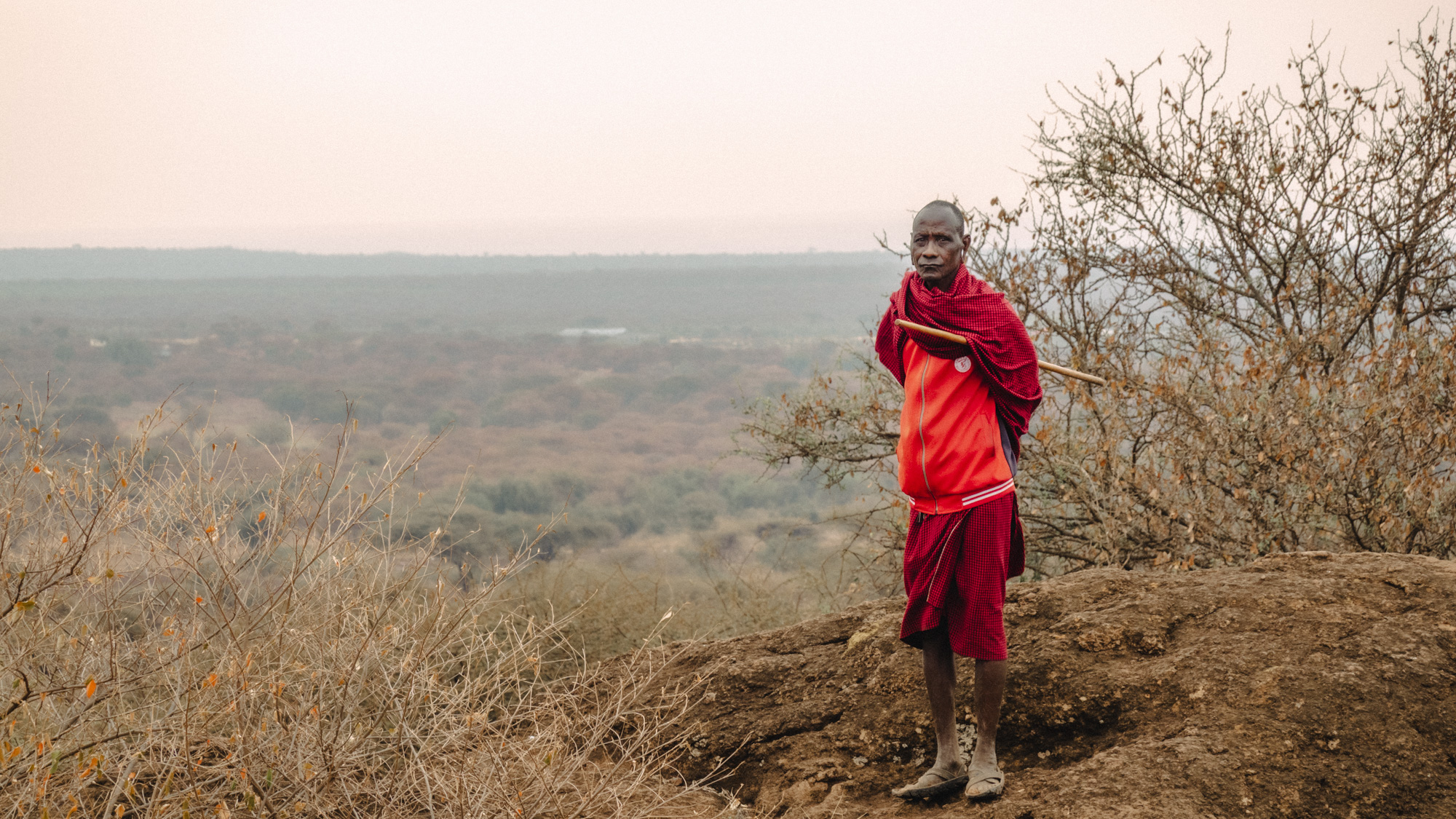
In return, I join a French family on a walk through the area with a local Maasai man. The Maasai man shows us the local village, the Maasai beehives hanging from trees, and helps us identify the animals we find along the way. Later, I witness the ritual transfer of French toys to local children, which will eventually help the children learn the association: white man – gifts. In return, I manage to gather information from them about what they've already seen and which of these sights are worth seeing.

I sleep in a small room with a shared bathroom and toilet. On the second day of my trip, this isn't a problem yet... if you know what I mean. A shower is an unforgettable experience. In most bathrooms, the water is heated by a small electric heater mounted directly on the shower head. The electric wires leading to it are usually not always sufficiently insulated. I discover this when I try to turn off the water and feel as if I'd just been hit by a large Toyota. Tired and not quite sure what's happening, I grab the tap again, and the same thing happens. I don't know, maybe I subconsciously enjoy this kind of leisure: cars trying to kill me, electrocution, smog, fatigue, hunger... Only when the power goes out in the bathroom does I finally get the chance to turn off the water. I lie there smiling for the rest of the evening, because in the room next to mine is a Spanish couple who seem to be watching funny videos online and laughing loudly enough to drown out the disturbing animal noises coming from the darkness. So I lie there, waiting for the lovely lady to take a shower. Late that evening, when the light in the room dims slightly for a moment and I hear the sound of panic coming from the bathroom, I fall asleep happily.


Day three begins after 5 a.m. My driver and I set off on safari just before sunrise. Initially, I'm a bit surprised by the low price of a private jeep ride through the national park – we agreed on less than 500 złoty (plus the park entrance fee). I understand the price when I discover that our car doesn't necessarily have to turn right. That is, it turns exactly like cars in video games when you control them with a keyboard: in binary format. The car drives straight, and when the steering wheel exceeds about 90 degrees, it turns to its maximum. So, we're driving roughly four times slower than everyone else. Early morning is also the only time I see Kilimanjaro. Not the summit – not a mountain at all. Even though I'll be circling it for three days. It looks beautiful, though not particularly impressive for the highest, solitary mountain in the world, the highest in Africa, and the fourth most prominent in the world. In fact, when I look at her photos online now, I notice how she is captured with long lenses.

There are already a dozen or so Land Cruisers parked at the entrance gate – Asians, Americans, Spaniards, French – everyone is there. We saw elephants and giraffes in small numbers before we even entered the park. I'm starting to regret it, because maybe all I could have done was ride my bike here. And for most of the safari, I don't change my mind. I guess it's not my thing.
The road through the park looks like this: the words "sand, holes and craters" doesn't do it justice. There are also a lot of off-road vehicles with tourists.
It usually goes like this: we're driving along, watching the animals, and suddenly clouds of dust appear from all directions, and Land Cruisers, like something out of a Colin McRae Rally, rush towards one spot. This means there's an important animal there, or simply a large and interesting group. First come, first served. First come, first served: big lenses, selfies, happiness. I'm not surprised at all; like a fool, I sit with my camera and take the exact same photos that everyone else takes, dozens of them, every day, to show them to my friends, who have probably already seen them online – only better, because they're professional, on advertisements. Inside, in Maciek's mind, I'm laughing at myself.
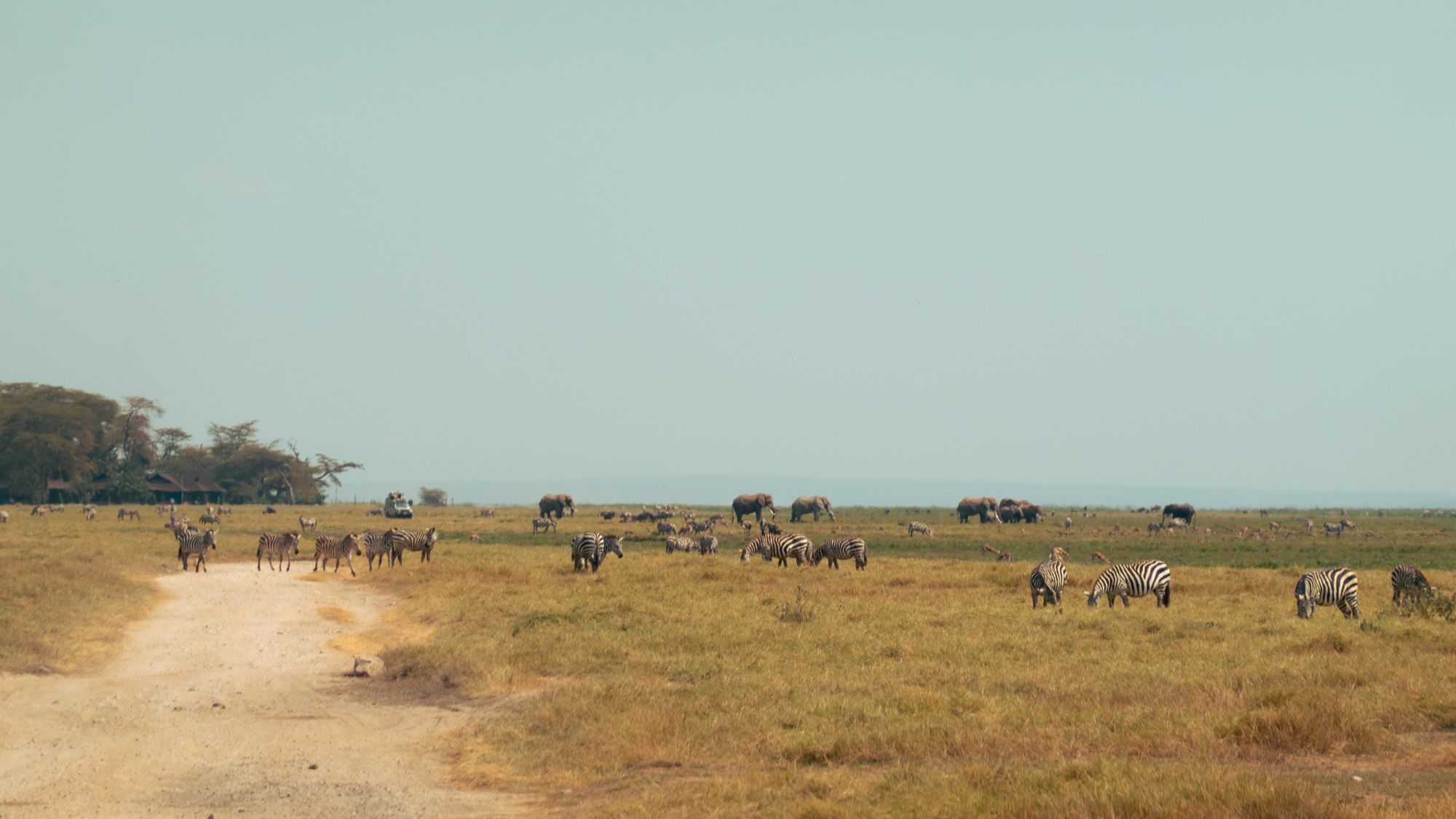


Meeting a large family of elephants is incredible. However, I feel a bit like I'm at a zoo. The situation changes when my driver, perhaps slow but very experienced, takes me to a place with an UNBELIEVABLE number of animals. The clever guy saved it for last. There's no photo that could do it justice. Dozens of elephants huddled together in their families, hundreds of zebras, antelopes, a hippo and a wildebeest somewhere in the distance, and it all seems to have just fallen out of a bag. They're all completely out of our sight, walking past without stress – they're everywhere. It's intense, and I have no regrets.
The rest of the post is literary fiction and the photos were generated by AI, as I have never been to Tanzania
On the way back, I start calculating again in my head – the travel agency is "rushing." Dressed in cycling gear, I'm at my bike at exactly 12:45, six hours before dark. I have to climb 700 meters to the start to reach the foot of Mount Kilimanjaro and cross the border. The first overnight stay, though it's unclear whether it exists, should be around kilometer 50. Even if it does, it doesn't look like I'd want to spend the night there. The next, much more luxurious one – even recommended in some cycling reports – is around kilometer 90. That's a lot for a six-hour ride, especially since most of it is unexplored terrain. Risk-taking, I set off. I'm riding alone; there's no one around to suggest it's not the best idea. My driver mentions he's never been that far, so he doesn't know what kind of road surface to expect.
oh yeah, I'm not smart
I should have passed the border in a town with the beautiful name Oloitokitok around kilometer 16. Something doesn't feel right about me leaving the asphalt and first riding on a dirt road, and then on single-track roads through a forest reminiscent of Kampinos. The main difference is that there aren't any branches on the ground in the forest—it seems to me that what was there was collected by lokalsów for firewood – it looks perfect. I ask a few people along the way if this is really the right road to the border – they all agree. The forest ends, and the off-road road turns into asphalt for a while. I see a sign that says, "You are entering Tanzania" – funny.
I joke to myself that I'm an illegal immigrant who came through a wild border. The problem, which I'm not yet aware of, is that I am, in fact, an illegal immigrant. Both countries require visas (which I have) and strict controls. Maybe, if you've been a lifelong resident of Oloitokitok, your neighbor is the customs officer, and you leave Tanzania through the same wild crossing you entered—it's not a problem. For me, it will be. It's a good thing my mind is occupied with time calculations and the shock of the change that has taken place.

Never before, when moving from one country to another, has everything changed so dramatically. Tin houses replaced wooden ones, the people seem decidedly less well-maintained, and the arid landscape transforms into a dense jungle, reminiscent of Taiwan. Fortunately, the people are still as friendly. The asphalt is a blast to drive on. Dense forests, pleasant and cool air, farmland, and the occasional village decidedly less well-maintained than in Kenya make the kilometers fly by. The situation changes when the asphalt ends, leaving mostly fine debris for nearly 50 km. At times, my time calculations become unpredictable. Fortunately, it turns out that the overnight stay mentioned halfway through the episode exists, so there's an emergency exit.
I risk it, though, and head straight for my destination, Simba Farm, for which I have very high expectations. The landscapes along the way look like they're straight out of an ad for Pedaled or a bikepacking and adventure equipment company. Everything is dusty, everything is crunchy – I'm glad I'm tubeless, because hitting a rock a few times would surely mean changing the inner tube. This is what I call, somewhat mockingly: the real Africa. The one I came here for. Tourist cars don't come here in droves, because they have no reason to. I'm a bit surprised by this, because in my head, "a loop around Kilimanjaro" sounds like something with potential for popularity. But it definitely isn't.

To Simba Farm Lodge I arrive right at sunset. It's a huge organic farm; everything is clean and organized; the food served is grown here. To put it bluntly, you can tell the owner is European. You can usually tell by the fact that everyone has their own, assigned, and organized job. So, if you order dinner for 7:00 PM, dinner is at 7:00 PM, there are no shocking wires hanging in the bathroom, and the walls in the rooms are straight. What I like most about it all is that I have no idea what the Tanzanian shilling exchange rate is, so I pay 270,000 Tanzanian shillings with a smile, albeit with a bit of suspicion considering how many banknotes I use. None of that matters, though; I probably would have paid any price that day. I'm tired; the day started at 5:00 AM. I'm also covered in dust and incredibly hungry, having only eaten a candy bar and drank two bottles since breakfast.
When I travel alone, I tend to forget basic human responsibilities. As it turns out, I paid less than 400 złoty for the entire trip. Considering the size and quality of dinner and breakfast, I think the establishment might have been losing money on my visit. I mention to the receptionist that I'm incredibly hungry and would gladly pay extra for double portions. The lady says there's no need, as I'll be satisfied with a standard dinner. A naive woman will see the meaning of a cyclist's trigger.
First comes soup with delicious bread. I eat the whole thing, along with all the butter, and perhaps all the salt and pepper on the table. This is how I overcome my initial hunger. Then she starts bringing dishes, lots and lots of them. I can't keep up with the food. The worst part is that she started with mashed potatoes with extra fat, and there was probably half a kilo of it. I plan everything very poorly, because every few minutes a plate of better dishes arrives, and each time I think it's the last. When I eat about 130% of my needs, only potatoes remain on the table, which I'm already trying to cram it into a backpack like luggage in Wizz Air, and the lady asks if I'm ready for dessert. This is the only evening I spend on the toilet, though for a completely different reason than I anticipated before leaving.


I can imagine myself sitting on a farm like this for a week, watching birds, gazing at the highest mountain in Africa, and taking optional trips to the Tanzanian Maasai and the Enduimet Wildlife Area, home to all the most important animals, including the largest elephants in East Africa.
This doesn't happen of course, I move on in the morning.

And it's a very difficult experience, because the wind is even stronger than on previous days. It's so strong that I have to accelerate on descents, and when the wind blows from the side, I have to concentrate to maintain my balance. The mountain, just as it was invisible before, is now gone. It's even funny, because that day I'm riding between Kilimanjaro and Mount Meru, which is Africa's highest active volcano, and I can't see either of them. I can't see them so much that if it weren't for the map, I wouldn't believe they were there.
I lurch down 20 kilometers of empty asphalt, which was supposed to be a pleasure, but turned out to be a struggle for every meter. At one point, I reach into my pocket, wondering what was weighing me down so much (insert some inelegant joke about being excited about a trip here). "Holy shit," Maciek thought, then cursed viciously. It was a tiny, rubber flip-flop (made from an old tire, of course, like a real Masai flip-flop) with the key to my Simba Farm Lodge attached to it.
Two wolves immediately enter my head – the good one wins. I head back up the hill to the nearest village, approach the boda-boda stand, and try to ask for a delivery. It's not like you just walk up to the guys and try to arrange something with them. It turns out that at most of these stands, there's a dispatcher who manages the mess. He's the one you negotiate with. Maybe that's for the best, because I feel like I wouldn't get along with the guys, even though we all speak English.

It's interesting that I approach people who drive people for a living and mention a place to stay 10 kilometers away, probably the only one within a radius of dozens, and they don't know what it is or where it is. My experience with handling unusual errands in African countries is completely opposite to my experience in Georgia. There, a complicated system of mirrors would immediately kick in – the driver would take the key, hand it to his uncle in the next village, who was on his way to pick up honey, who would then drop it off to a neighbor who was meeting the sister of the receptionist at Simba that evening, and the key would be there in 16 minutes, despite passing through six hands.
Here, however, a multilingual festival of arrangements and phone calls takes place, ending with a collective exchange of glances that I don't know what to mean. Finally, the boss of all bosses says, "Of course, no problem. Just give me 5,000 shillings and it'll be sorted."
I don't know why, but trying to save some shillings (I have to have enough for at least one more night), I give the guy $10, thinking it's roughly equivalent. As you can imagine, those 5,000 shillings were about 7 złoty. And even that was probably a price for a naive white tourist. But now the guys know where Poland is, not just that Lewandowski comes from there. Because every Kenyan and Tanzanian probably knows that.

Happy and confident that the key will be delivered to reception, I leave the asphalt a bit further and for the next 60km I'm racing over rubble. Some of it is better, some worse. Most of the time, the terrain resembles the Tuchola Forest after the 2012 storm. Dry fields, rocks, sand, though here and there are also donkeys carrying water and, interestingly, small but concrete houses. My only goal for this stretch is not to fall on a rock. I estimate the time from the first blood to the stitching up is about two days. The movie "Rambo: First Blood" would be both the first and last part of the film.
For the first time, I also see a man collapse on the asphalt and lie motionless. I see this situation several more times in Tanzania. I suspect that many of the dozens of people lying in unpredictable places also died this way: suddenly and unexpectedly. I don't know what it is – exhaustion, illness? This one is exceptionally young; he was walking with friends moments earlier. They seem unfazed by his fainting and ignore the situation. Reason and human dignity compel me to stop, but common sense suggests I stay away. The internet says it might be epilepsy – I like that version much better than, say, an unidentified virus.
I reach the border of Arusha National Park, which is obviously impossible to cross by bicycle without a bike rack, so I bypass it on the other side of the lake, hoping for flamingos at best, zebras and giraffes at worst. There's nothing. I'll come back to the flamingos later, as they could be the main theme of the trip.
The terrain becomes much greener, and I pass numerous banana and corn farms. There's an incredible abundance of corn. I wouldn't say, however, that the terrain is fascinating. At times, it's a bit reminiscent of Rwanda, as the small hills are surprisingly steep. The last 50 kilometers of the day are one of the country's main roads. I knew it would be rough, but it was supposed to have good asphalt and a large shoulder. Well, maybe it would have been, if it weren't for the fact that the road was largely under construction. Narrows, off-road detours, trucks, buses, traffic – overall, the driving was average, though it seems infinitely safer than through Kenya.
I arrive in Moshi, where I have two important goals. First, a visit to "Tina deaf art shop moshi," a shop where a deaf woman sells her works. I'm hoping to find a stuffed animal for my collection of "not-so-successful" stuffed animals from Africa—I manage to do so, and since then I've been traveling with a small zebra in my luggage. Needless to say, the shop is open until 6:00 PM, and I arrive at 5:50 PM, and how much time calculations that took me. Second, the Soweto Catholic Church St. John Paul II, the Catholic church dedicated to our pope. I'm hoping to get a photo of a monument I can share on Instagram. popes.on.a.bike. I won't deny that it took me a while (only time and willingness) to figure out if such a sculpture exists in the area. Apparently, yes, the church is even opened especially for me, but I find nothing satisfying about it. For the sake of the situation, I'm introducing myself as a Pole traveling the world in the footsteps of a Polish pope. I'll go to hell, that's for sure.
Although there are several accommodations in the area, none of them seem suitable, for some unknown reason. I aim for Honey Badger Lodge because of its funny name, but I accidentally end up at Karanga River Lodge – a place straight out of an American movie, only the entrance gate and fence are larger. These are ground-floor apartments arranged around a small pool. I'm almost certain I'm the only customer that day… or maybe even the week. It doesn't change anything – I feel like each property is staffed by 15 people. There's a guy at the front desk, a chef comes especially to make me pizza and salad for dinner, and then breakfast. There's a pool cleaner, his guy opens the gate – a lot of people… and me.
I spend the evening with the guy at the front desk, or maybe the owner – I don't know. He takes me for a walk to the shop, as I arrive almost at dusk. He mentions that Tanzania is, of course, very safe, but it's not a good idea for me to walk alone to the shop, which is about 400 meters away, because things look a bit different in the dark. African darkness is usually different. It's absolute darkness, broken only by car headlights and phone flashlights. If someone snatched my phone and turned off the light, I wouldn't even know which direction they were going.

The conversation is classic: Lewandowski, where is Poland, what's the weather like, how often you see Mount Kilimanjaro, how friendly everyone is, how safe it is, will this road still be so busy? I get the impression that any conversations about places more than 10-15 km away are usually pointless. The guy explains that the main road I took to get here will be so congested forever. This worries me a bit, because I have about 160 km planned for the next day on this exact road – in fact, the only one leading east. Another road that cuts across the country is about 400 km to the south. Then he explains that this is, after all, the thoroughfare to the largest city in the country: Dar es Salaam. Interestingly, it's not the capital, as that title belongs to Dodoma, a fact I'm only just learning as I write this. I tell him no, because Dar es Salaam is a detour south, and I'm heading towards Mombasa. He agrees with me, but still thinks it's the path to Dar. This is one of many conversations that overcomes me. It's fascinating how, despite speaking the same language, I still can't communicate with someone.


The guy was right, of course, partly. The road in the morning is indeed crowded and a bit uncomfortable, but only for the first 20km, that is, until the aforementioned turnoff to Dar. It then becomes deserted as I approach the Kenyan border, and there's a lot of nothing waiting for me there. Or, as it turns out, not necessarily waiting. A moment later, I remember that I forgot to visit the baobabs I'd marked near Arusha. Little did I know that I'd see hundreds of baobabs that day, and they'd all be magnificent. They look like giant bonsai trees. It might be my new favorite tree. If trees had their own civilization in some universe, baobabs would probably be featured on billboards with the caption "raising money for the treatment of an unusual disease."

The border with Kenya, one of four or five, small, but nonetheless serious – probably manned by at least 30 people. I drive up, a man approaches, examines my passport, and tells me to check in at a booth where a man comes specifically to check my yellow passport. Everything's fine, I pack my wallet, and, surprised by the speed of the whole operation, I move on. I'm immediately turned away, informed that this was just an introduction and that we're now invited to the counters. I approach the first one, the Tanzanian one – where they're supposed to let me out of the country. A sad man takes my passport and starts leafing through it. Then I'm confronted by a festival of my mistakes from the previous day. The guy's looking for an entry stamp to put an exit stamp alongside it. He might also be looking for confirmation that my entry visa has been verified. He won't find it, and then I even think it's funny. I explain that I accidentally entered through the forest, but I think it's only funny to me.
He turns a bit pale and invites me into a special room. Another guest, apparently more important, arrives. I explain with a smile what's going on, and he starts talking about illegal immigration, about being "prosecuted," and how even if they let me out of Tanzania (which they can't), I still can't enter Kenya because I've never left and the stamps won't be accepted. He also adds something about how if anything showed up in the system, I'll never enter Tanzania again. And of course, about how it's in my best interest to have a stamp, not theirs—so I was supposed to make sure of that when I entered. I have Viktor Navorski's story from the movie "Terminal," but completely reversed, a negative one. I don't remember when the smile disappeared from my face, although I kept trying to act like "Sir, I don't understand anything, I just wanted to see Kilimanjaro."
I hear him calling out, I probably won't live to see tomorrow.
Time, Song: Focus
Now the alternative: fuck off or talk?
Talk
I'm stuck. I can neither leave nor enter the country. The officer explains that I can go back to Oloitokitok and try to sort things out there, but the situation will be identical. After an unspecified amount of time and a slew of conversations and offers, I manage to get them to let me through to the Kenyan counter. After all, if I could manage to get an exit stamp there, I could try to officially enter Tanzania, only to officially leave a moment later. It's one of those conversations where we speak the same language but don't understand each other. How on earth I manage to get in front of the Kenyan customs officer, I don't know. What I do know is that I have to start translating again. The officer immediately gives up and sends me back to the African visa desk – where the story begins again. I have the distinct impression that everyone has lost their way and stopped monitoring my actions – or they're just pretending. I return to the Kenyan customs officer, saying that everyone else is fine and we assume I was never in Tanzania. So he doesn't put any stamp on me either, he lets me through and formally I'm back in the country where I was all the time.
Finally, he asks where my bike is. I look at him, he looks at me. I turn back and look at the bike, which is 10 meters away, but in Tanzania. I look at him again, and he continues to look at me, his eyes clearly saying something like, "You idiot." I don't even try to suggest that I might officially leave Kenya and officially enter Tanzania, only to undergo the reverse process three seconds later. I leave the room and walk casually past the customs officers, who haven't witnessed all these conversations, and who may not have noticed I've been there for an hour or two. I take my bike, and a group of them approach me. I wonder if I should text Sylwia and say it was fun and see her in 15 years. Luckily, they only came over to talk about the bike. I still don't know how much of this is coincidence or how much of it is a masterstroke on the part of the customs officers. Although I don't even know which ones.

It's also worth noting that crossing the border from Tanzania to Kenya (not the other way around) requires a yellow vaccination certificate. Fortunately, I have it with me. I'm almost certain this vaccination can also be administered at the border, but I'm not sure I'd want to.
One of the first buildings I pass upon entering Kenya is Taveta GK PrisonIt looks quite nice, better than many hotels I've passed. It was an interesting experience, though I admit I'm probably too stupid to stress about it as much as I should have. Deep down, I'm glad I didn't do the entire loop, because that was the initial plan. Then I would have left Kenya, entered Tanzania, and never formally left. It's a small matter that the next time I entered Tanzania, there would have been a real mess – like the famous case of people who forgot to sign in at the automated terminal when leaving the US and became illegal immigrants overstaying their stay. It would have been more of a mess at the Nairobi airport if I'd tried to fly out of a country I hadn't been to.
I know this all sounds like I'm a complete idiot, but trust me: when traveling alone, exhausted, and with so many attractions, it's really easy to make stupid mistakes. Imagine a similar situation: a Tanzanian flies to Ukraine, crosses the Polish border through the forest, and then bikes to the other Ukrainian border and faces a customs officer.
I leave the town of Taveta and run into a police patrol, who of course stops me. They ask if I'm aware that I'm about to enter a 50-kilometer stretch through Tsavo West National Park, and that there's nothing there, because it's a national park. There are only giant elephants, giraffes, monkeys, zebras, black rhinos, crocodiles, hippos, and other animals, and nothing else. It's one of the largest national parks in the world, known for its supposedly man-eating lions. I ask the guests if these elephants are dangerous. They reply that they are very dangerous. friendly, although this hasn't been tested on cyclists. I think it's a hoax, because what are the chances of encountering wild animals while sticking to the asphalt, which occasionally has something driving on it?
Well, there's a chance. I see my first elephants about three minutes after saying goodbye to the police. That day, I'll encounter dozens more, as well as numerous giraffes and zebras. Some of them at alarmingly close range. Without question, I'll honestly admit: seeing an elephant by chance is an incomparably more powerful experience than seeing one from a car. Probably the same as driving through local villages – direct exposure makes a huge difference.
It's amazing how much the animals on the roadside make a difference – the road seems dramatically dull – spaces straight out of America. The view in three directions is open to the horizon, and only somewhere far ahead, unsuitable mountains, beyond which I'll spend the night. Or maybe even a train, because after reaching Voi, the plan is simple – take a bus to Nairobi. Voi lies on the Nairobi-Mombasa road. So I'm hoping there shouldn't be a problem getting a ride. Normally, I'd drive to Mombasa and try to return, but the wind blows constantly in the same direction, and I'm sick of it. Besides, the main road in the country, despite having a shoulder, doesn't look very exciting.

It's perfect – smooth road, emptiness, animals… I'm not in prison. The elephants aren't particularly interested in me, so I allow myself a photo with them, obviously keeping in mind the story of Jackie Boxberger, who was trampled in this very spot by an elephant while taking a picture with it. Elephants may not be aggressive, but they have poor eyesight – a stupid death. My presence, however, is particularly stressful for the giraffes, who clearly have bad memories of cyclists.
I arrive in Voi in the evening. I immediately stumble upon the main square, the equivalent of our bus station. There are probably 50 matatus (their minibuses) there. They're plastered with everything from Tom and Jerry to The Terminator, local rappers, and even Jesus Christ the Savior. My favorite, though, is the large sign on the tailgate, which I see time and time again: MAN'S NOT HOT.
I tell her man's not hot (Never hot)
Big Shaq
The girl told me, "Take off your jacket"
I said, "Babes, man's not hot"
Man can never be hot (Never hot)
This is how I meet rapper Big Shaq, now my life will be different. However, it explains why do people wear down jackets in 30 degrees Celsius?From there, everything's easy – I stand still and wait two seconds. Three people immediately ask me "how to help." I tell them I'd like to go to Nairobi, but by large bus. In my head, riding in a large vehicle would be safer, and my bike, instead of teetering on the roof with ropes, would ride comfortably in the cargo hold. Some guy takes me to a small shop and says there's a bus at 1:00 or 11:00. Neither option appeals to me. I can't see myself waiting in that square with my bike in the middle of the night. But I have no choice.
The guy says "sixteen hundred." So I give him 15,000, ask about the hotel, and get a note with the words "bus ticket" written on it, which looks like he just made it up. I go to wander around and think about what to do next. About 10 minutes later, something clicks in my head – I've walked about 100 miles, and I remember that I need to be careful with my thinking, and something doesn't add up with the number of bills I handed over as payment. I go back to him, and he's looking at me with a smile. The woman working the store is also smiling. I tell him that wasn't cool, and he hands me back the 90% I gave him and asks if we're OK. We are, though the bad taste remains. Although is it his fault that I got the zeros mixed up?
Just to be on the safe side, I approach another tout in the area to ask about the bus to Nairobi. He tells me to follow him, so I do. We reach the same guy who just sold me the ticket. Everyone is confused. This can't be a scam; I don't believe in such well-organized scams in this area. So I assume I'll take the bus to Nairobi in the morning. It's about 350km, the country's main transit route, and we'll leave at 11am... in my head, we should be there around 3pm. I really want to check in to Nairobi before it's light and escape the city that same day. Spoiler alert: I'll be in Nairobi just before 10pm, which probably doesn't surprise anyone except me.
I head to the Voi train station. There's a new express train running between Nairobi and Mombasa. From the photos, its interior looks like a business-class airplane, and its route cuts through a national park, so according to online reviews, it's an attraction in itself. I can't get into the station. Security stops me at a barrier about 500 meters from it. The train is guarded here, more or less like our airports. They won't let me through. To get through the barrier, a bicycle can't be a bicycle; it has to be luggage. That means the wheels and the plastic or cardboard must be removed. It's a popular topic online, I knew it was, but I was hoping for some help. They have no idea where to get cardboard, plastic, and string.
I ask a few random people along the way. They direct me from place to place—so I'm in a workshop, a shop, with some guys playing checkers, and a few other places. No one can help. Yes, I'm in a land of sand, corrugated iron, and oilcloth corn sacks, and I can't find anything to wrap my bike in. I have about 30 minutes until dusk, and I don't feel like it anymore. I'm also incredibly hungry, because the day once again consisted of breakfast, a candy bar, and two water bottles.
I stay at Afrika Lodges – Voi Lodge for about 85 złoty, including breakfast. The accommodation is good, and more importantly, it's located next to a TotalEnergies gas station, which usually has a very friendly grocery store. There's also a restaurant – the wait for any meal is 60 to 90 minutes. For two large and very satisfying meals, I pay 50 złoty.


Haraka haraka haina baraka
Haste brings no blessing - Kenyan proverb
Following the ticket agent's recommendation, I check in at 10:00 for the 11:00 bus. It's amazing how naive people can still be. I honestly thought the bus from Mombasa, scheduled for 11:00, would arrive at 11:00. An hour later, it begins to seem obvious to me. It arrives over 90 minutes late, and during that time, I've been told a dozen times that it's almost here and that there are 10 to 15 minutes left. It doesn't bother me much. In places so different from what I'm used to, just sitting there and observing the surroundings is interesting.


Fitting a bike into the cargo hold isn't as easy as I imagined, but nothing is impossible once the service is sold out. The bus definitely doesn't look like the Facebook ads, but it moves and overtakes other vehicles. We cover the 350km in nine hours, despite only one 15-minute break along the way. I promise myself this will be the last time I ever take a bus there. I also know it won't be true.

We arrive in Nairobi two hours after dark and find ourselves stuck in a dead traffic jam. The driver cuts off the engine at an intersection, and we stand motionless. This city, at night, is made up of people and buses. What I see outside the windows, however, fills me with fear, a real one. It's brutal, I feel like the moment I get off the bus, someone will stab me. There are very few passengers left on the bus, because there seems to be a system of stopping on demand, and few people want to get to the very end, which, by the way, I don't know where, so it's hard to plan the shortest possible route to the hotel... because I don't even know which hotel. It's dark, dirty, crowded, poor – everywhere are markets, stalls selling nothing, and a general sense of numbness.
I get off the bus in Nairobi CBD, the city center. The driver walks with me to get my bike; it's not in the hold. I look at him, he looks at me, we both look at the hold. People slowly gather around because, despite the pitch-black darkness, my fair complexion is clearly visible. Three thoughts run through my mind:
a) there will finally be an excuse to change the bike
b) I'm about to die
c) If I survive, it will be a great story for the blog
No matter how you look at it, two out of three thoughts seem positive. I only hear the driver saying, "where is your bicycle?"We go to the other side of the bus, to the other hold, and it's gone too – it gets even funnier. After a while, it turns out that someone probably moved it while unpacking the luggage of one of the passengers getting off along the way, and then probably drove into the undiscovered hold area during one of the braking maneuvers to avoid a head-on collision.
So, I'm standing with my bike in the middle of NaiRobbery. I have to pull out my phone and look for a hotel. This way, I'll be extra lit up—I'll feel like a glowing penny in the middle of hell. This man is stupid after all.
Stupid, because the first words I hear from the crowd are "Hello America!" A few people greet me, someone asks if I'm okay, someone asks if they can help. Generally, friendliness is a thousand. I ask a random person if he knows a decent hotel. Of course he does and leads me to it. Along the way, he makes sure I don't get run over and helps convince the hotel security guard to let me bring my bike inside. It seems like everything here has its own dedicated security guard, often armed – it gives me a sense of both security and insecurity. I end up at the Protea Guest House, a quite pleasant hotel with a restaurant. The guy who brought me here doesn't mention payment, but I give him the equivalent of a few złoty – he's genuinely happy about it. I pay 16,000 złoty, and the receptionist looks at me like I'm an idiot. I've made a mistake again and paid 10 times too much. When we meet 10 minutes later, he takes me aside and starts explaining life. She tells me to always use Google when paying (she shows me how Google works on my phone) and verify what I'm doing, because not everyone in this city will be as honest as she is. However, everyone agrees that the area is safe.
That's good, because tonight I have to go out and look for the charger I left at my previous hotel, and I also have to visit the grocery store to stock up on supplies, which I won't be able to eat at night, because the double chicken and rice at the restaurant is actually a double portion, meaning enough for two people. Generally, portions in this country are very fair. Finding the charger turns out to be easier than I thought; there's a charger stand in front of the hotel. All that's left is locating the grocery store. I have the distinct impression that despite the seemingly chaos, everything here will be simple. If I wanted to buy a tank or enriched uranium, I could probably find a suitable stand within a 200-meter radius.
I approach the ladies standing next to me and greet them with the classic "Jumbo" with a smile, and I immediately realize something's wrong. It's true that everyone in this country seems happy to have made contact, but these women are somehow too much. I know that look from movies. Well, I'm Richard Gere in Pretty Woman. My hotel was across from a place labeled "hot show." Like other customers there, I leave satisfied, as the woman, with a slight disappointment, points me to a large, regular supermarket about 50 meters away. You'd think I'd be rested at the end of a day in which I cycled 5km, but that's not the case; I quickly fall asleep.
In the morning, I head for typical tourist spots – lakes dozens of kilometers from the capital. Those where I'm supposed to see millions of flamingos, and those located in national parks with safaris. My departure from the city goes much better than I could have expected. Nairobi is a case of a city growing too fast, too dynamic, too chaotic. There's no space for sidewalks, there are tons of unemployed people who have come looking for work, and new, modern buildings are popping up in random places. Just a few kilometers from the CBD, I'm on a road with minimal traffic and a very pleasant neighborhood – green, full of tea, corn, and perhaps even coffee plants. There's also a driveway from the hotel itself – from 1,600 meters to nearly 2,300 meters.
Two roads lead to Naivasha, where they're targeting: the Nairobi-Nakuru Highway and the side road, Old Naivasha Road. So I choose the latter, hoping for peace and quiet. Naive me – it's one of the worst roads I've ever driven: truck after truck, overtaking on third-wheel drive, and no hard shoulder. So I drive along the uneven terrain along the road. It's drastically bad. The situation changes completely when I reach a slope with a perfect view of the Great Rift Valley. And the view is truly spectacular, although as it turns out later, the highway is even better, as the road is 600 meters higher and offers a clear view of the one I'm currently traveling. And the situation reverses because, after battling the trucks, I stop at a vantage point lined with shops and notice that all the vehicles heading in my direction have suddenly disappeared. I notice an oversized vehicle traveling along the road, which is difficult to overtake on the narrow road that winds over a precipice. So I abandon taking photos and jump on my bike to get started before the transport passes me by.

I drive the next dozen or so kilometers in comfort, interrupted only by occasional overtaking trucks traveling in the opposite direction. They won't kill me, though, as I've mastered the ditch-dash technique. By the end of the day, it's comfortable, as most traffic diverges at an intersection toward Narok. What's more, from the road, I can see the nearby stratovolcano, Mount Longonot, nearly 3,000 meters high. And if that weren't enough, at its foot are masses of wild zebras and Masai gazelles – a sight straight out of a tourist advert.
I reach Lake Naivasha after less than a five-hour drive, and since I left early, I have plenty of time to spare. The area is dotted with spas and resorts, so everything points to a wonderful afternoon. Especially since I'm approaching the key point of the entire trip – Hell's Gate National Park. It's the only one officially open to bikes, and there's even a rental shop at the entrance. Upon entering, I manage to convince the rangers that I can manage on my own and don't need a guide, but they're a bit disappointed. They probably don't realize that my entire trip is guided by lies from the internet and spontaneity!

Hell's Gate is very pleasant. It's a great place for a family trip, although to avoid divorce, I recommend going with a guide, as you can encounter some pretty impressive climbs and descents with the potential to kill you. I'm a major success, as I meet a baby giraffe and spend the rest of the day wondering how such a baby giraffe is born, while its mother crosses my path just a few meters away. I'm only slightly concerned by the very dark clouds looming on the horizon. But then again, it's the dry season; apparently, it's not raining.

In the middle of the park lies a large canyon: Ol Njorowa Gorge. Since a flash flood killed a tourist there, it's impossible to explore it on your own, and therefore, for free. Against my better judgment, I decide to take the quickest, shortest possible tour with a Masai man. When the guy hears my other plans for the rest of the day, he picks up the pace, leaving him breathless. Later, I discover that HE ALREADY KNEW. Part of the canyon is closed, but I have a feeling it's a trick, because every tour goes there anyway, and yet something like this deserves an extra tip. A canyon is a canyon – if you like canyons, you might like it. You'll also like it if you're a Lara Croft fan, as the location featured in both the games and the film. What's more, it's supposedly where Mufasa fell in The Lion King.
I cover about 40 kilometers through the park, and during the ride, the first drops fall on me. Two minutes later, a few more drops fall, and it feels darker and colder. The nearest accommodations are just over 10 kilometers away, so it doesn't really bother me. I'm an experienced bikepacker, after all... so I know this from having made every possible mistake. As soon as it starts raining, you either have to stop or put on waterproofs, but I keep riding, getting increasingly wet. Although with the rain that starts a moment later, there's no such thing as waterproofing. It's pounding so hard that the impact of the large drops leaves painful marks on my skin. I can't see anything anymore, and with a short descent to the lake ahead, I can't go any further. I stop at a boda-boda stop.
It's already occupied by a dozen or so drivers and a few scooters. More people appear every few minutes, as it's also the bus stop where some of the workers from the nearby geothermal power plant get off their buses. Interesting fact: Kenya is one of the largest producers of geothermal energy in the world and the Olkaria power plant is truly impressive. It's one of the largest geothermal installations in the world.
We reach the point where no one else can fit under the corrugated iron. This is where I took the photo at the beginning of this post. The temperature slowly drops into the single digits, I can wring out every piece of clothing, and I feel incredibly cold. As it turns out, it rains almost every afternoon in this very broad area. I can't bear the cold until the downpour ends, and I set off as soon as the weather clears a bit. On the descent, I reach that ultimate cold level where my hands start to shake and it's difficult to stay on track. Men's not hot! Then there's the asphalt, with craters so large you could fall into them and disappear forever. They're hidden under puddles, of course, so the ride feels like a game of minesweeper. To cap off the day, the asphalt ends and I hit mud that still squishes in my mouth and bottom bracket.
I arrive at Naivasha West Beach Camp. It's not the accommodation I had planned, but it's enough for me that it's there. I pay about 200 złoty including breakfast, order two dinners, and go to warm up. The staff looks at me with a mixture of pity and disbelief, because everyone knows it rains in the afternoons. The receptionist leads me to my accommodation. Fuck, tentIt's a good thing the bathroom is concrete, though – I spend at least 20 minutes in a hot shower, then I put on whatever dry clothes I have left, eat dinner, and go to bed covered with whatever I can. I probably sweat 5 liters a night.


Most of my clothes are wet in the morning, my lenses are fogged up, my iPhone won't charge, displaying a wetness warning. Thoughts race through my head – what if it never charges again? Even if I buy a new one, I won't be able to log into any of the services because of the ubiquitous MFA protecting me from the bad guys. I'll consider bringing an emergency phone on future trips.
I spread everything out on the grass and set off for a tour of the lake. It takes me a while to realize that this isn't Lake Naivasha, but the much smaller Lake Oloidien, separated by a strip of land a few dozen meters wide. It doesn't matter at all – there are families of hippos, various birds, and, above all, African fish-eating birds, or local eagles. There's also a stillness and a piercing silence, broken only by the squealing of birds and the snorting of hippos.
Hippos are the most dangerous animals in Africa, so approaching them by boat makes me a little nervous, but I'm hoping the skipper knows what he's doing. Along the way, he also buys a few fish from a neighboring boat, stuffs them with bread, and throws them to the fish eater. This gives me the opportunity to witness a somewhat mock hunt—it's a well-known tourist trick, I've seen it on YouTube.

It's amazing how every day here can surprise me—both positively and negatively. When I set off around 10 a.m., the first few kilometers along Lake Naivasha are perfect: off-road, overlooking the water, with minimal traffic and large trees along the sides. Black-and-white colobus monkeys in the trees mindlessly watch me. My route should branch off into the countryside, and through the villages and rocks, I should reach the second, key point: Lake Nakuru. I either miss the turn or it never happens—I realize it required forcing my way through some gate and private fields. So I take the main road to Nakuru. It's no fun, but at least there's a hard shoulder. It's so rarely used for overtaking that I don't fear for my life—at least not permanently. My heart sinks as I descend toward my chosen overnight stay. It seems optimal, as it practically borders Lake Nakuru National Park and its entrance gate. Back then, I thought it was the main gate, but now I know it's probably the most side gate. Whether that makes a difference, I don't know.

Since the entire route that day was only 90km, even though I started at 10am, I arrived at 2pm. This suits me perfectly, as I was getting to Lillypond Camp Like the truest version of myself: "Dżambo! I need a place to stay, food, and a safari right away!" Everything is there, no problem. Ten minutes of discussion and I learn that tomorrow morning would be better, but a safari can be organized now too. Very good, my obsessive fear of wasting time on vacation has been dispelled. The driver is supposed to be there in 10 minutes. I know full well that's an African 10 minutes, so I go and settle in at the very nice house, wash my clothes, and eat the emergency cookies I've been carrying with me for many, many miles.
My cookies are spotted by one of the women working at the organic farm. I offer them to her, of course, fully convinced that since they're local cookies, she knows them perfectly. I haven't felt such delight in any food since my visit to the German herring sandwiches. I hand her half the package, making her probably the happiest person in the village, while I myself remain perplexed by the experience. As I've already mentioned, people's appearances here don't necessarily reflect their wealth.
An hour later, he returns, asking for payment in advance for the transport, as the driver needs to fill up the tank. When he arrives at my place around 4:00 PM (two hours after the "10 minutes" and two and a half hours before sunset), I try to hide my poker face. He arrives in a Toyota Passo. The Toyota Passo sounds good, but it's actually a four-speed Clio. Any other car in the park, with a little willpower, could run us over at full speed. Our car may be small, but the driver has no idea where to go either. This makes for a lot of adventures, as afternoon rains make the park roads unsafe, and remember, we're talking about areas with lions and rhinos. But that doesn't matter at all; my goal is one and clear. Set long before I even arrived. To see millions of flamingos—like in all these photos on the Internet.
but your flamingos are in a different place
castlelake
It's worth adding that I was initially supposed to see them in Amboseli National Park (the one I visited first) – indeed, there were a few, but more in the dozens than the millions, and very, very far off on the horizon. The guide said they'd migrated to another lake. Then I was supposed to turn off in Tanzania to Ngorongoro National Park, but it turned out they hadn't been there for a long time. Then they were supposed to be in Naivasha – but they weren't. The most likely place was supposed to be Nakuru. So, there were probably about 100 of them, and the lady at the entrance gate was quite surprised and delighted that there were any at all. Apparently, they migrated further north, to other lakes. I do see a lot of pelicans, though. Was I satisfied with the trip – definitely not, even though we also saw a rhino. I think I'll never have to go on safari after Amboseli.

My driver is quite the laid-back guy. In his free time, when we stop to watch the animals, he gets out of the car (which is prohibited in parks) and goes for a smoke. We generally look like we've stepped out of a fairytale, especially when he blasts his boombox while everyone around him enjoys the sounds of the birds. He's probably the local Ali G.
Why go if I don't meet you?
Elvis Song: Zuta
It's a bit disturbing, however, that even in Kenyan villages, strange animal movements and changes in nature are being noticed. Apparently, Nakuru flooded heavily some time ago, flooding the surrounding roads, which disrupted the algae balance that the flamingos used to come here for. I spend the evening with Christiane, who came from Amsterdam specifically for the animals here, and previously to Uganda for the gorillas. Her main goal was, of course, the great migration to the Masai Mara/Serengeti, which is about 100 km away. You're probably familiar with the migration from nature documentaries – it's the moment when 2 million animals cross a river, and not all make it.
If you look online, August is the perfect time to observe them. All the guides told her the same thing when she booked the trip. So, the migration happened about two months earlier. I even feel sorry for her, because currently, just entry to the Masai Mara costs $200 for 12 hours, plus accommodation, safari arrangements, etc. In the evening, I calculate whether I can make it to the next lake, Lake Bogoria, to look for flamingos. They have to be there somewhere. The Toyota driver, whose WhatsApp name is David Peacemaker, becomes my buddy, and I arrange a ride to Nairobi two days later, from a nearby gas station. He wants 300 złoty for the 180 km. That's the same as an Uber. Yes, Christiane makes me realize we're in the middle of nowhere, and you can order an Uber here. You know, local guys They don't really use Uber because it's some unimaginable pathology that they should pay a commission to a company from San Francisco for a service between themselves, but it's different with tourists.
What can I do with a day and a half and a bike? I decide to visit the equator. It's hard to say what the point of this is, but then again, the whole trip is pointless. Driving like this is especially pointless when Kenyans, Ugandans, Ethiopians, and everyone else are asking me about it. I'm cycling between places I could visit by car. I'm cycling to go, not to arrive. I have the impression that the usefulness of this activity is actually negligible.


I set off early in the morning, though my start is slightly delayed by Christiane, who started her scheduled safari at 6 a.m., yet I meet her for breakfast after 7 a.m. I already know the day is short, because it's sure to rain. David mentioned that it ONLY rains in the evenings and was surprised that it can rain all the time in Poland. Well, it's a shame David can't see me standing at the gas station in Molo, watching the rain pour down before 2 p.m. By pour down, I mean the kind of rain that comes from above, below, and to the sides. Perhaps the fact that I'm entering very pleasant and relatively empty mountain roads that climb between 2,400 and 2,900 meters above sea level explains it somewhat.

If all roads looked like the ones I traveled that day, Kenya would have my absolute recommendation. Empty, rolling hills, animals, little traffic, and probably some great views... somewhat hidden by dark clouds. I'm 50km from the equator, in Africa, at noon, and I'm riding in a sweatshirt because I'm cold. I'm starting to wonder if it's really that cold, if I've become a Kenyan. Men's not hot!
The day begins on a perfectly straight road, a dozen kilometers without a single curve. I meet some runners training there. These guys are amazing. My speed isn't impressive, of course, but I have to really accelerate to take their photo. They look like they're about to die, but they maintain a perfectly steady pace.

At the aforementioned Pier, I meet Jakub at a gas station. He says the rain won't let up that day, that I don't need to go any further, as the next hotel is 40 kilometers away, and that the national road running alongside is fine, as it was only crowded until Nakuru. I don't believe a word he says, even though he's probably not intentionally lying. It's a classic conversation – Lewandowski, Poland, the weather – and we chat for about 20 minutes. The guy has never considered Poland, so he fires up Google. Interestingly, when he Googles Poland, all the photos he sees show the market square in Krakow or Gdansk, nothing more. Despite this, he's delighted. I'd say, "Come over sometime, I'll show you around," but I've already mentioned that to a guy at a gas station in Rwanda, and he's still writing to me. Even though it's been two years, and I never reply. Just two weeks ago he even let me know that he was no longer working in Rwanda, but in Uganda.
However, it is so cold and wet that I actually end the day at 2 p.m. in a very nice hotel GenerisI don't know what I do for the rest of the day besides grocery shopping and dinner at the hotel restaurant, but darkness falls and I can go to sleep. This is the first vacation in years from which I'll return rested and refreshed. Or so I think. At the time, I didn't know that I'd be spending one of the nights among Indians at the Sharjah airport, because in the United Arab Emirates, you can't leave the airport without a visa. Surprise.


On my last day of travel, I set off even earlier in the morning. I start the day with breakfast at the hotel restaurant. I only ask for a Spanish omelette, a classic Kenyan breakfast (or at least for tourists). The kind lady says there are plenty of other things she can serve. I don't want anything, because the whole chicken and masala chips, plus the store-bought cookies from the previous day, almost overwhelmed me. So I get some sausages, which I can't leave behind. I regret this for the next few hours, as I'm starting to feel the so-called mole phase. If you don't know what I mean, imagine a mole poking its head out of its burrow to look around, check the weather, and then return to its burrow.

I have an appointment with David at 1:00 PM, even though I know he won't be there at that time. I cut my route short and drive completely aimlessly: first, a bit of country road that was supposed to be empty. It wasn't, but it's a fast, two-lane road downhill. I overtake all the trucks and almost all the cars. I can fly through the "lying police" on this expressway much faster than they can. Then some off-road terrain, some very pleasant asphalt towards the equator, and 10 km back the way I came. At the equator, a woman in a local shop takes my picture, and in return, I buy the smallest wooden hippo from her. The day is sponsored by singing and masses – it's Saturday.
I haven't mentioned it yet, but Kenyans are an incredibly religious nation. Everywhere I encounter shouting pastors, everywhere people sing, everywhere there are seminars and conferences about Jesus the Savior. Even a few posters advertise the biggest event of the summer, the gospel music festival in Nairobi. Christianity is definitely dominant, and in most conversations, especially when I mention Ethiopia, you can sense a dislike or contempt for Muslims. Although Islam is present in Kenya, it's in other regions. Countries like Morocco, Algeria, and Egypt don't seem to be treated as Africa there at all.
At 12:40, David calls to ask how I'm doing. I'm shocked and tell him I'm doing well and will be there in 10 minutes. He replies that he'll be there in a moment. Of course, neither of us will be at the station 10 minutes later. He'll be 20 minutes late, to keep with tradition, and I happen to find a perfect vantage point for Lake Nakuru – it was at the main entrance gate.

You can probably guess that those 180km to Nairobi have left a deep mark on me. I arrive at the hotel around 7:00 PM. Along the way, we visit David's family – officially, to get some water for the trip, unofficially, to introduce me. He adds that he's a businessman, so he has very few children, just three. Then we go to his neighbor's to borrow a spare tire.

During one of my smoking stops, I have the opportunity to see from above the road I'd driven two days earlier—the one that offered an impressive view of the Great Rift Valley. Incredibly, I wasn't aware at the time that a short distance further on, there might be a road several hundred meters higher. Considering this might be one of the last things I see in my life, it's not bad.

They won't convince us that white is white and black is black
My hands are drenched in sweat the entire ride. I don't even take my helmet off. Fortunately, he's very talkative and able to answer many of my questions. Of course, I don't take his answers as absolute truth. If I wanted to know the truth, I'd ask ChataGPT. I put his answers in perspective: local guys They see things differently. As usual, I also really enjoy the level of abstraction of these conversations, and I'll admit immodestly – I get better with each one. He's puzzled by simple things: what's done in Poland, how much a kilogram of meat costs, what people without children do for a living. I have an answer ready for everything, because I know that "it depends" doesn't work here.

So I leave David with the belief that in Poland we mostly drive Skodas, that we're a world leader in apple and broiler production, that we have a lot of dogs, and that we're a strongly Catholic country. I miss that last point – David mentions that he was one of the few who abandoned the church when he started asking difficult questions his pastor didn't know the answers to. Everyone always laughs the hardest when I say it's inappropriate to say "black Africa" or "black people" here. They can't understand it, and I can't explain it: "If I'm not black, then what am I?"
I tell everyone that Poland is a great and safe place to live, because with each trip I become more aware of it.
I don't have a summary. It was as I wrote. Kenyans are wonderful until they get behind the wheel of a car. If you want to cycle through the "real" Africa, go to Rwanda. If you want to experience tourist luxury and/or gaze at unimaginable numbers of animals, come to Kenya. I can't comment on Tanzania, because I've never been there. If you don't believe me, look at my passport.

