
I prepared for bikepacking through Lesotho by reading all the sensible texts on the internet – in Polish, English or Google Translate. It took me a good 15 minutes, because there was so much material available. Robert prepared even better – only when he got there did he discover that it is one of the most mountainous countries in the world.
Let's start with the fact that the text below is not a guide or a handbook. It is simply a loose report from a 10-day holiday trip to Lesotho. If it were a guide, I would have to take some responsibility for my words, and I do not want that. It would also be appropriate for me to start it with information on how to obtain a visa to enter this beautiful country, also called the Kingdom in Heaven (loose translation). And I do not know that. Despite our best efforts, we were unable to obtain such a visa either at the embassy in Berlin (which has an overflowing mailbox), or at the main one - in Pretoria. The latter, at least, made an appearance by asking us to fill out an endlessly long visa application, asking for, among other things, medical tests, a 3-month bank statement, a full itinerary (including confirmation of the booking), and information on how much money we had. Perhaps I should have included the mortgage in that last point and the officials are laughing to this day, knowing that my account balance is probably minus 200 of the average salary in Lesotho.
I should also add something about poverty, apartheid, 25% of the population infected with AIDS, sexual violence against women, life expectancy close to 50 years and a few other great things that effectively discourage people from coming to this country. To be honest - I would rather not know. The image of Lesotho that I had in my head based on fragmentary information from the Internet did NOT correspond with our observations. Which of course does not mean that it was not true.
The people of Lesotho were the nicest people I have ever met. There was probably not a single person who didn't smile when they saw us. There wasn't a single person who didn't want to help us. There wasn't a single person who didn't burst out laughing when asked about non-alcoholic beer. In general, they seem to be a nation that has a great potential to die laughing, because everything makes them laugh. Maybe not as much as the idea of non-alcoholic beer, but every interaction seems to end in laughter. Even one that doesn't include us.
In my opinion, this is a great place to start an adventure in Africa. It is poor, but clean. Of course, I do not mean the cleanliness of the landscape, because rubbish, plastic bags and diapers are an extremely common sight, accompanying us almost all the time, except for the high mountains. I mean the dirt seen in Ethiopia or Uganda - the kind that makes you want to cut your hand off as soon as you touch something. Everyone is nice; there is always someone nearby who speaks English; reasonable hotels are usually 40-60 km apart (in the case of driving on asphalt); there is nothing in the shops, but you can survive on bananas and Coke for a long time, and the route is easy to plan, because there are two or three possible combinations.
I can sincerely and with a clear conscience recommend this country for a visit with a road+ style bike. Just get in shape, because you won't find such climbs anywhere else in the world.
STEREOTYPICAL
Resident of Lesotho
So who if not us, what if not a blanket?
For a race, for an animal, for a picnic, for a piece of furniture
For almost every occasion, for almost every need
Here it is, brother, you see, the whole secret is hidden
Blanket, if anyone was wondering
What is the source of style, where is the source of power?
Blanket, you must always have a blanket


The stereotypical Lesotho resident is smiling, waving and shouting Hawaiian "huuuu?!" or "how are you guys?!" He rides a pony or a pickup truck. He is dressed in a blanket and has a balaclava with a bobble on his head. Most of the time he is looking at his goats or at work that needs to be done.
It is also incredibly difficult for the stereotypical resident to take a good photo without using a flash – so please excuse the invisible details in the photos.
Before I get to the story, the most important questions and answers, for people who came here just to look at the pictures:
HOW MUCH IS IT:
We are there from Saturday to Sunday. During this time we spend about 600 euros per person + flights. We live luxuriously - we sleep in good (for "African" conditions) hotels, eat large meals in restaurants, travel a thousand kilometers in taxis and generally live the high life.
IS IT SAFE:
I see two dangers. Missing a turn by a bike or a taxi driver, resulting in a kilometer-long flight down and a slow death in agony, because no one would ever find us in this abyss. And even if they did, transport to the nearest medical facility would take two days. Second: hitting a goat/sheep/cow on the descent. To sum up: a bike trip to Gassy on a warm Saturday morning seems incomparably more dangerous than a trip to Lesotho.
There is of course a hypothetical risk of being shot with a rifle in any large store, but it would have to happen by accident, and the security guard would not only be upset, but would also regret the needless use of bullets.
We returned from the trip full, rested and generally relaxed. Not at all like we had planned. I go on holiday to sit in the office and say with a smile: it's wonderful here.
IS IT WORTH IT?:
I don't know, but that's what this post is for. Maybe it will allow you to answer this question. I'll say right away that in terms of views it's nice, but not enough to push yourself to the other end of the globe. However, I think it's worth confronting your idea of "Africa" built with the help of television and the poem about the Negro Bambo with reality once in your life. Lesotho is perfect for this, because it's simply easy (although physically difficult).
good equipment
Bad equipment
My Factor is indestructible, unfortunately. I would love for something to break or fall apart on it. It would be justified, considering the life it leads. Nothing like that happens and for 5 years now it has bravely accompanied me, crashing on roofs, in trunks, trains, planes, ferries and terrain it did not deserve and did not expect, being born in Taiwan. I ride with 38mm Gravelking SK+, which may not be particularly good at driving, but are like a garden hose when it comes to penetration and like an AK47 when it comes to shooting rocks at me and everything around me.
For Lesotho I would probably recommend 32-35mm slicks if it's a road-taxi trip (because at the moment there is only one possible road loop in the country and it's not great) or 40mm+ if it's a gravel-shoe trip (because you won't be able to get through some of the passes). Tailfin on the back is the best solution in the world, period. In addition, a not-so-good Apidura under-frame bag that hasn't broken for years, a small Raphy bag under the handlebars and a custom "feeder" from Koło Ultra, in which I keep my camera (the indestructible Fujifilm x100v) - also the best solution in the world. I also carry a Sony RX100VII in case of emergency, but I practically don't use it. It's mainly used for taking pictures of things, people and animals that I'm afraid to approach. There were no such people in Lesotho, and there were practically no animals, apart from those encountered in Poland. The difference in the pleasure of using Fuji vs Sony and the subjective quality of the photos is so great that the 95% takes photos with Fuji.

The breakdown quota is set by Basso Palta Roberta (Roberta is a variation of the name Robert, to whom the bike belongs, not the name). Everything breaks down in it. The seatpost comes off about 47 times (similar to Ethiopia) and it takes 4 days to find a solution. The cockpit unscrews, and we don't know how the expander works. Both (!) Velcro straps come off the Ortlieb rear bag, the hook bends, the derailleur throws the chain into the spokes about 30 times.
We land in Johannesburg late on Friday evening. The nearly 11-hour flight from Amsterdam is probably one of the most beautiful flights you can take in your life. It starts with the Alps and the French Riviera, and then there is almost the entire continent of Africa – from the deserts of Algeria, the Sahara, the capital of Chad to the forests of the Congo. We appreciate it very much: I sit by the window, but exactly in the middle of the wing, and Robert sits somewhere in the middle. On the way back it is even better, because the entire journey takes place at night.
Our bikes arrive with us (which doesn’t always work) and are unpacked surprisingly quickly from the plane. Or so it seems to us, because they are delivered behind a steel door, locked with a padlock. Fitted so badly that we can see the suitcases, but strong enough that we can’t break through them. Only after about 30 minutes of waiting do we discover that the lady whose only job is probably to sit next to the door and open it with her key is waiting to be asked to do so. A British guy standing with us at the oversized one sums it up briefly: “Bloody Africans. They are all so lazy.” Indeed, in most situations we have to accept a decidedly more Spanish approach to understanding time and work than the German one.
We check in at the hotel (located right by the airport, so as not to waste time) a little before midnight and finish putting the gear together around one. Not very comfortable. I let the guy I had arranged a lift with via a Facebook group from Johannesburg to Lesotho (about 400 km) know that everything is fine and we are waiting, as agreed, at 8 am in front of the hotel.
At 5:40, I wake up to a WhatsApp message saying “I’m here.” I do some serious mental math about the time change, our previous communication, and a few other variables that I might have missed during an 18-hour journey, but I just reply “We’ll be there at 8, waiting for breakfast” and go back to sleep. At 7:58, happy and full, I get a text with a print screen showing Google Maps and “12 minutes to go.” Thirteen minutes later, I see our taxi (the guy sent me pictures on Facebook to prove the bikes would fit) drive past the hotel and head for the airport. A few more minutes later, I get a text saying “we’re waiting outside the airport, can’t find the hotel parking lot.”

Let me put it this way, our two drivers are like a cross between Harold and Kumar going to the White Castle restaurant and the Penguins of Madagascar appearing in New York. It probably takes us an hour or two to leave Johannesburg. On the way we drive down the same road a few times, drive against traffic somewhere and generally unheard of things happen and icons disappear from the dashboard. The guests have navigation, but more of the kind that says "keep left at the previous exit". Johannesburg's road infrastructure certainly doesn't help, which if compared to that in Lesotho would be the same as Męcikał's ratio to Warsaw. Our request to visit a currency exchange office doesn't help either, because it turns out that it's not necessarily easy. The only currency exchange office/bank open on Saturday mornings is located in the nearby shopping mall. We walk around it more or less the same way we drive around Johannesburg.
The exchange of money takes us between 60 and 90 minutes and requires at least a few human interactions and about 14 signatures. Really, so many, it even makes the lady at the window (who issues documents, which you then take to the cashier and come back for more signatures) laugh. About halfway through that time we discover that we left our bikes and luggage in the car with strangers we had arranged to meet online. All our luggage is there too. But I don't worry about that, I treated them to a sandwich from Żabka earlier, so we have a real bond that will prevent them from robbing us.
I can't say what I think of Johannesburg. Everything is fenced in with huge walls and barbed wire fences, but no one points a gun at us. The security in this whole South Africa is such that opinions are divided and I don't have mine yet.

We arrive at the border with Lesotho about 3 hours later than planned. One thing is for sure: if I were to cycle there from Johannesburg, it would be less enjoyable than cycling through Ciszyca in winter: straight, endless fields disappearing into the horizon and from time to time workers' estates built of tin, which I definitely wouldn't want to approach.
The border is potentially our biggest challenge. We deliberately do not enter the capital city of Maseru, but a smaller town recommended by our drivers. We do not have a visa and we know that formally we cannot enter. We go there with the “Jasio” strategy, which means you stand there and do not understand what is happening. We get out of the car and go to join the queue. We get to the window, Robert tells me to smile and says that a smile solves everything. So I do “smiles in Polish” and hand over my passport. The border guard stamps with a smile and lets us go. It was easier than we thought, we surprised ourselves, we are winners, we entered Lesotho… or at least that is what it seems to us when we get in the car.
100 meters further, when the driver drops us off at the next queue, we already know that it's not like that. We got a stamp to leave South Africa. We approach the next window using a trick. Someone tells us to approach from the other side, pass everyone and push through the window. So we do it, sticking to the "Jasio" strategy. We give them our passports, the lady looks for a moment to see what country it is, then looks at the list of countries printed on the wall, and it clearly says POLAND - VISA: YES. She says that we won't get in without a visa. She adds that she won't get a visa here and that without a visa it's only possible in the capital, if you have a letter from the embassy, period. We stick to the strategy and stand with a blank look of "dumb and dumber", saying that we don't know what now. Nobody knows.
✴︎ There are some potentially illegal things here
A few minutes later, in an unknown way, we are already standing in the same room where they are sitting at the windows and stamping. They take our passports and say that the situation is difficult. It seems even more difficult when we discover that we are in the zone between South Africa and Lesotho without passports. We feel a bit like we are in the dean's office. The impasse lasts a long time, one of the ladies (responsible for trips) sometimes turns around and says that she really wants to help us. We both feel internally that the ladies expect financial support in this difficult decision. However, considering the presence of cameras, the number of people in the queue in front of the window on the other side of the wall and the volunteers in T-shirts with the words "corruption something" that we saw at the crossing in South Africa, we do not really see it. Marek Hłasko wrote that "Prison is always fun if you approach it the right way. Everyone is always innocent; everything is a mistake that will soon be cleared up". But I saw the series about the prison in Maseru and I feel that it would be fun for everyone except us.
So we drag our taxi driver into the situation. There is a moment along the way when we are sure we will get through, but there is also a moment when we are sure we won't. Someone calls somewhere, someone talks to someone, something happens, sometimes nothing happens. Finally, the driver comes up to us and says let's go. We set off at a fast pace and we are not to look back. He leads us like Banderas led Salma Hayek. Only there is no explosion. But that's good, because apparently we have an appointment with one of the ladies to return on Sunday, just before 6 a.m. Apparently we won't make it through any other crossing. He is supposed to be at this window and let us out of the country at exactly that time. If anyone wonders what two white guys are doing at the 6 a.m. crossing on Sunday, we will answer that it is normal for us to be driving around the city at this time. He is also supposed to let us know about the fare, I think. All that is missing from this story is giving us half a 2,000-peso bill, which we are supposed to return when we leave. No matter, we are in Lesotho with a stamp in our passport.
„Holy shit, this is hardcore, here we go again"one would like to say when entering Lesotho - we are in the country again like Ethiopia. A lot of stalls made of sheet metal, some kind of fire on the sidewalk, a lot of traffic, chaos. However, two minutes are enough to notice that this is neither Ethiopian nor Ugandan crossing in Kyanika. There are no homeless people, no meat hanging by the road with flies, no malnourished animals, it is poor but with dignity.
We ask the driver to stop and drop us off here. He is slightly shocked, because not only was he sure we were going to Maseru, but our actions also lacked some sense. In fact, we will get out of the car and cycle for a week along a route that he could have taken us two days. The idea of moving around by bike for no apparent reason is not always understood, even in Poland. However, this way we end up in situations that are hard to explain, and that is beautiful.

Our route is not exactly planned, we don't even know whether to go east or west. Looking back, I still don't know how to go better. I do know that the decision to go in the direction of the wind was optimal, because the wind in Lesotho can be a factor that decides whether you can ride. I'll just mention the day when I couldn't stand in the cranks because the side gusts would have thrown me off the road. It's probably only today that someone would notice that I fell off the road. There's a good chance it would be a goat.
It's 4:00 p.m., we have a little over 2 hours until dusk. To remind you how smoothly our journey went, I'll point out that we set off theoretically at 8 a.m. On the way back (because if this post has appeared, it means that - spoiler alert - we survived and returned), we set off from the same town at 5:40 a.m. and we arrive at around 10 a.m. - that's twice as fast. We're in Maputsoe (here is a video on youtube about this city). 15km west of us is Hlotse, and 30km further on Butha-Buthe, both of which should have hotels, after that who knows. The latter sounds much better, because it supposedly means "place to lie down" - just right for us.
The route isn't great. Slightly hilly, African asphalt with nothing interesting. The upside is that even the most uninteresting areas with civilization are still exotic to us. A tiny bike shop, a woman with a bowl on her head, a group of shepherds, interesting buildings - you can find an interesting detail in everything. It's also hard to expect that the main road in the country with the number A1, connecting all the largest towns, will be great. Because Lesotho is divided into a small flat part (>1500m above sea level) in the north-west and the rest of the country, which lies above 2500m above sea level - definitely less populated. Here's an interesting internet fact:
Lesotho is the only country in the world lying entirely above 1000m above sea level (the lowest point is 1400m above sea level); 80% of the country lies above 1800m; the average altitude is 2161m above sea level


We arrive in Butha-Buthe shortly after 6 p.m. I would like to say that it was without incident, but completely unexpectedly, halfway through the route, black clouds appear behind us, which decide to motivate us to drive faster with the help of passing rain. As it turns out, afternoon rain is completely normal here. As compensation, we get a rainbow. We have at least 10 hotels to choose from - we choose the one closest to the main street and the food. As it turns out, very fortunately, because when darkness falls, it is absolute. Life slowly dies after dusk, and you can move around just as well with your eyes closed - it doesn't change anything. I would like to joke that we become the most visible people in the area (lokalsów you just can't see it at all), but that would probably be out of place. Generally, we don't arouse much interest. True, everyone greets us, asks if everything is OK, wants to help, but unlike, for example, Ethiopia, we don't feel like Taylor Swift. That's just right, I would say.
For a night at the Crocodile Inn Hotel we pay 900ZAR, or about 30zł. We are shocked, because the price also includes (the smallest on the whole trip) breakfast. The room is large, there are all the cosmetics, a clean bathroom, two beds. We feel that for this week we will live like kings when it comes to expenses. Hours later, over pizza, and in front of KFC and a shop (no dietary limits apply on vacation), we add up that it is not 30zł at all, but 300zł. An awful lot - in general, everything in Lesotho is somehow suspiciously expensive. It takes us about 4 days of price torture to discover that we are still using the wrong conversion rate and it was actually 200zł. These are still not the prices expected in a country like Lesotho - most hotels are around 200-250zł for two. A large set at KFC is around 25zł. It is worth adding here that there are two currencies in use: ZAR from South Africa and local Loti. The exchange rate is 1:1, the only problem is that if we pay in ZAR and they give us Loti, we won't be able to pay in South Africa with them, and it probably won't be so easy to get to a currency exchange office. But there's no problem, because Robert and I are professionals in spending money. I exchange 600EUR, Robert 500USD. At the airport in OR Tambo I'll check in on the way back with 50ZAR in my wallet. After walking around the entire facility I'll discover that it's enough for one scoop of ice cream or an unsharpened pencil. Great, it'll be a present for Sylwia. A happy situation, because she got an eraser from her vacation in the Basque Country. Next time (I hope it'll be in Zambia or Gambia - come visit me) I'll hunt down a sharpener and I'll have a complete set.


The next day begins with a mission. It's Sunday morning and we need a toothbrush. Well, it turns out we don't need one at all - Robert simply lost his in his capacious bags, but that's even good. We have the opportunity to look for an open shop on Sunday morning, which is not at all obvious, because the big shops are hidden in side streets. As it turns out, most of them are full of Chinese products, and some are even run by Chinese people. This Chinese expansion is a bit worrying in Africa. Just like us "Ladies, they want to kill us with socks", so there must be some other, better plan there. I don't know what it is, but at least one diamond mine that we pass on our route allows us to guess. We find the shop only because we are directed to it by a random passer-by, who is a bit surprised by our presence. The fact that there is always someone in the area who speaks English makes life much easier. To our delight, Robert gets a bamboo, ecological toothbrush (of course issued at the cash register in a plastic bag) with black bristles. Now he has one with black, one with white. I buy an emergency pack of dates, which I remembered at that moment - I'll be right back, I'll go take it out of the bag after 2 weeks.
At that time I didn't know yet that this would be one of the most amusing routes in my life. We have 3 potential hotels: at 60, at 75 and somewhere around 100 kilometers. The one at the hundredth kilometer now makes me laugh doubly: first, that it was even considered, second – that if we had reached it in the storm, it would have turned out that it wasn't there. Komoot says that we have roughly one vehicle in front of us: the track is 74 km and... 2700 m vertical. I conclude that this must be a mistake or a joke – it wasn't. Although after the first 20 km we didn't move much upwards, in fact almost not at all. The views, on the other hand, are getting better and better – more and more "real Africa*"Mr. Kazimierz Staszewski once said a beautiful sentence that fits well with what we want to see in Africa and what we see there:
More and more often I have the impression that people actually see what they want to see, know what they want to know, and if reality does not correspond to this, so much the worse for reality.
*this is of course a joke that always makes us laugh. Tell a Butha-Buthe resident that he doesn't live in real Africa, because it starts a bit further away. On the other hand, locals don't seem to think that Morocco or Egypt are Africa. When we mention these countries in conversation as visited in Africa, they add that the question "where in Africa have you been" only refers to - I quote - "black Africa".
I realize the seriousness of the situation when the counter shows me the nearest climb: 48 km with an average of 5%; then when the road slope regularly exceeds 15%; then when we exceed 2500m above sea level; then when the blackest of black clouds appear in the sky. Even spending the night there won't be easy, but more on that in a moment. I'll just point out that we continue on the road marked A1, but the traffic disappears and on average one car passes us every few minutes. I don't know if there are many countries in the world where you have to push your bike up the climbs on the main road in the country.
These traditional houses that you see in the pictures are not a rarity. Almost all of them look like this, entire villages consist mainly of such houses.


I am almost certain that the drive up to the “highest restaurant in Africa”, which was also supposed to be our overnight stay, was one of the most difficult in my life. The combination of factors I mentioned above certainly has an impact on this, and the increasingly dry air, which sticks the snot in my nose into sharp balls, only makes things more difficult. The contents of my nose resemble the contents of a tire half a year after it was filled with milk. On the way, we stop at the “Moskwa” bar – we have no room for ideology. We buy a Coke, which, as it turns out, I am really sick of after a week. In general, there is no water in the shops: there is Coke/Fanta and local fizzy drinks (I do not recommend). You drink water from streams or taps. You fill your bottles with water from the taps using a filter bottle – it is OK. To answer the question in your head: we are not afraid to fart throughout the trip, so this solution works. Best regards, Maciek.
I'm not afraid to fart! – Maciek
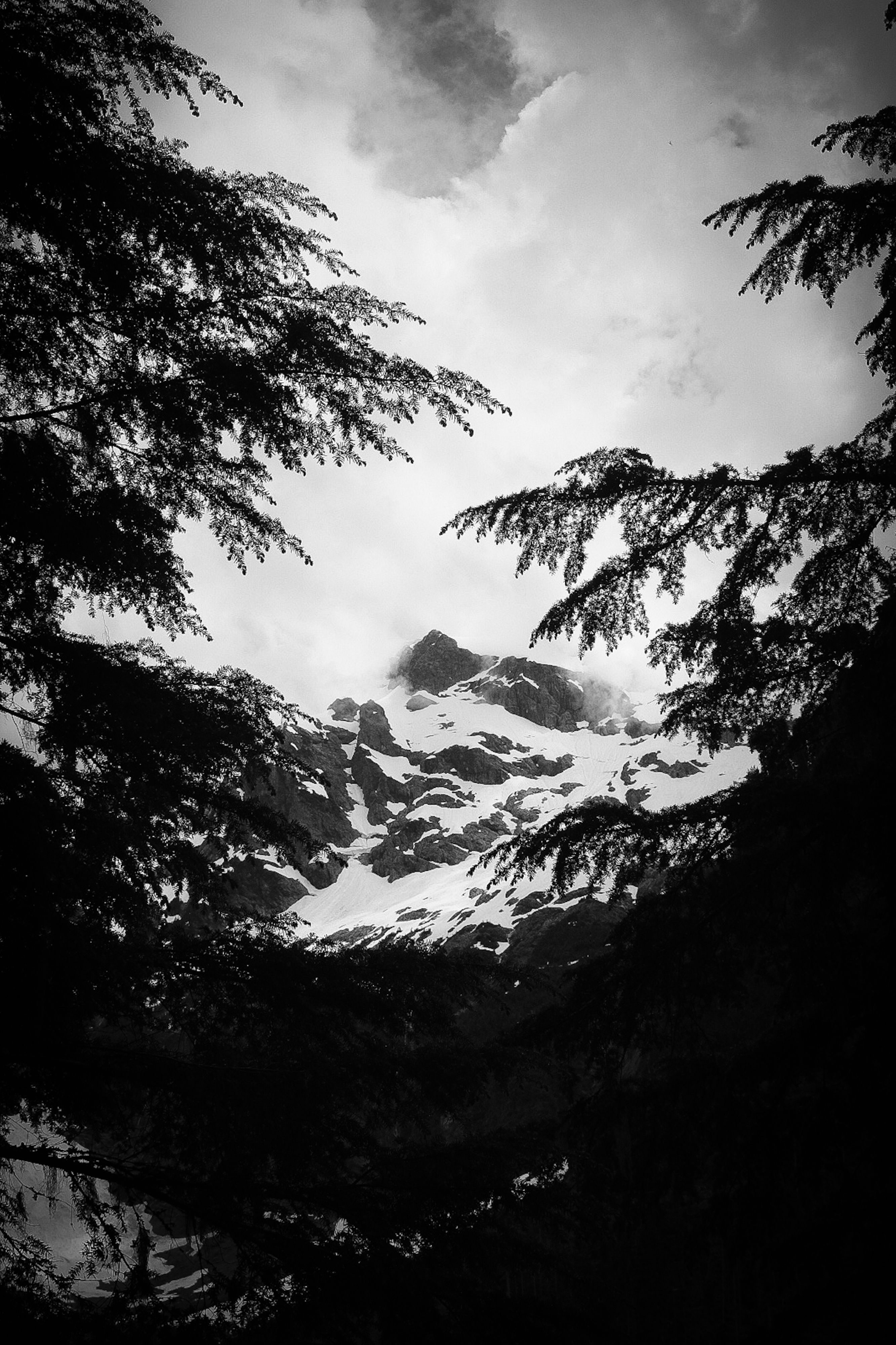
If you expect impressive views, this is not the right post. You can't capture the area in photos. It's a bit like a cross between the Moroccan Atlas and the Grand Canyon. The impression is made by the whole, which surrounds us to the horizon, not by a single frame. If you've ever traveled to similar places - you'll understand. If not, it's impossible to describe.


After 6 hours from leaving the hotel and covering a dizzying 60 km, we check in New Oxbow Lodge – our, potentially, first overnight stay. It's not a town, it's more of a Guest House, the existence of which none of us can justify in any way. Why would anyone be there as a tourist – we don't know. It doesn't matter, even a week later we don't know why people come to Lesotho. The only activities there seem to be donkey trips and mountain hiking, which doesn't look like much fun for hiking. We go in for something to eat. The lady at the bar is as surprised by our presence as we are by her answer "any food in an hour at the earliest". So I point to the breakfast menu, which mainly consists of eggs and sandwiches – that doesn't sound like an hour's work. The lady bursts out laughing like all the locals do when asked about non-alcoholic beer. She explains to me that it's 2:00 p.m. and breakfast is not served at this time. Oh fuck... We're in the middle of nowhere, zero people, dying of exhaustion and dryness, and the guy tells us that it's not time for breakfast. As if that wasn't enough, he looks at me like an idiot, making me feel like I'm actually asking for breakfast at lunchtime.
So I point to any other dish that seems quick. I hear that it comes with fries, which will be ready in an hour. It should be added here that the country lives on potatoes and corn, and the most popular dish in "fast food" (i.e. stands) is fries. I explain to her that it can be without fries. She says that it is not possible, because the set includes fries. A few sentences later she states that it is actually possible to order such a set and pay for the whole thing, but not get fries.
It is also worth adding that fries – which seem to be a national dish – are usually served with chili and salt seasoning. If you like very salty dishes, this may be a bit… too salty for you. We treat it as a supplement to the minerals that have come out with sweat.


I can't write it nicely, but communication is generally difficult. We speak roughly the same English, but somewhere in between, the element of understanding very often disappears. When explaining anything more complicated (e.g. ordering any food that can be served quickly because I'm about to die), I feel like my tutor in math analysis in Lesotho, Ethiopia, Uganda, etc. It's a conversation like "change to be" on the Day of the Wacko. 15 minutes later we reach some kind of agreement, I don't know what. A moment later we get toast with fries. Robert lies on a bench and doesn't move, I do some serious analysis in my head. We have 12 kilometers (880m uphill) left and 5km downhill.
The calculations in our heads are not made any easier by the fact that the clouds are catching up with us and bringing a storm with them. It is exactly the kind of storm you would expect at 2600m above sea level. We hide inside and give it two hours. That is about how long we need to get there before dark. We spend two hours looking at the wall and scrolling internet, which is fortunately available via wifi. I feel like a fool again when I recall the conversation from two hours ago, when I said that I couldn't wait for food because I was in a hurry. The rain ends about 2 minutes before the hour I considered to be the limit. We set off - a bit of a descent and another climb. I admit that the area doesn't look very friendly.


The plan was very good, but with every meter we rode it got worse. Especially considering that initial descent, which meant that if we decided to turn around, we wouldn't have "straight downhill to the hotel". The dark clouds returned and are getting closer to us, until they catch up with us and it gets bad. We are also approaching 3000m above sea level, so it is "kind of colder". It is worth adding that the seatpost in Basso has already come off 13 times, and the headset has become loose like Sylwia's knee (if a good ortho/physiotherapist is reading this, please contact me). We will die, that's for sure.
There's nothing like a holiday adventure
I was in a good mood in the morning and the weather was so sunny
Mom will say "He was a good boy, what a shame"
A TIR appears on the horizon behind us, without thinking for a long time – we stick out our hand. During the entire trip we achieve 100% hitchhiking efficiency, and we do it not once or three times. We throw the bikes into the back and ask the guy to drop us off at the hotel – it's about 5 kilometers during which we would either freeze or fall on a wet and steep bend during the descent and disappear into oblivion. The guy is super nice, he doesn't want money from us, but we manage to squeeze 20 PLN into him as a thank you. Surprisingly often people didn't want the money we wanted to give as a thank you. On the way he asks us if it's true that it's dark all the time in northern Europe now, because he read about it on the Internet. He also felt sorry for us when he heard that in Poland "There is no sun for almost seven months of the year (...) Only cold and cold and rain in this place in the middle of Europe". I ask him about winter in Lesotho, he mentions that everything fuck covered in snow. I ask him if it's possible to drive on the roads then. He says no, unless they clear the snow, then yes. Apparently temperatures below -20 degrees are not unusual here.
We get off at Afri-Ski, a ski resort (probably the only one in the country) and the highest restaurant in Africa. The whole thing is 200 meters below the pass we were riding, i.e. around 3000 meters. It's good - moderate quality accommodation, very good quality restaurant. It's also the only accommodation with heating - the other places were limited to electric blankets. The night is hard, it turns out that the altitude does its thing. So I spend most of it fighting a cold or staring at the ceiling. A large part of my thoughts is occupied by the question "how much longer can it rain", and Robert - "how much longer will this bike survive".

I really like going on vacation

Here I am on vacation. I may not be happy that it is super cold, pouring rain, and Robert's bike is about to fall apart, but I am happy that I am in my down jacket, trousers, have a place to sleep, and I am going to a restaurant for pizza. Carrying civilian shoes with me is an indescribable luxury. Only when I get out of my SPDs do I stop riding my bike - I didn't notice it before.
We also start looking for a man who knows anything about bikes, because we are limited to just moving the handlebars and pressing on the pedals. It turns out that the center has a bike rental, and when we accidentally enter one of the cottages, we come across several of the latest Madonna tens of thousands and a cycling team from South Africa. I have the impression that when creating our characters, someone moved the slider for "happiness" too far. I don't know if it was at the expense of the "sense" slider... or maybe I'd rather not know. Using their help would obviously be too easy, so we make an appointment for the morning and never come back to them.
8:00 sharp, after eating breakfast we attack the ski slope staff in search of tools and help with the controls. It would certainly be easier if the screws at the bridge were not completely worn out. Five heads are better than two – the guests use a flat one instead of an Allen key to unscrew everything. They pull the necessary screws out of their… ski slope vehicles. Then they even find an entire bicycle bridge. Of course, it is a mistake that we do not take screws in reserve, because we will be playing with unscrewing and tightening things for many days, and probably on the next trip. We try to buy the flat screwdriver from them, but it seems that it is incredibly valuable. I am almost certain that Robert could exchange his Warsaw apartment for this key in the current situation, but let's face it – we all know that in the current situation a screwdriver will be useful to everyone, and an apartment 9 thousand kilometers away may not necessarily be.
The bike works well enough that we can ignore the cyclists’ help – is that right? Probably not.
It's an interesting day, because for the first 40km we don't go below 3km. Apart from dried snot and rapid breathing, there's nothing to indicate this - the landscape is poor, but we could just as well have been 2km lower. I would probably feel a bit different if it weren't for the wind at my back, which helps me move. The weather seems to be kind, even though it rained all morning and the familiar clouds are still circling the area. It's that sneaky weather that it's supposedly cold, there's no sun, but if you take off your sleeves, in an hour your hands will freeze, and in two hours your skin will be burnt. We cross Tlaeeng Pass, which is 3255m high. A bit further on we pass a diamond mine Letseng Diamonds. I strategically decide not to take a picture of it. A month and a half ago, the 13th diamond larger than 100 carats this year was mined there. The village we pass a bit further on reminds me that I should be very grateful to the world that I am not a worker there.

Most of the time we ride on roads that could be used as a road cycling camp advertisement. Smooth asphalt, big, winding descents, minimal traffic. The descent itself is about 20 km of riding practically only downhill. The amount of energy put into the ride must be right, however, and at the end of it we will have a tiring in the wind.


On the way we pass a small town. There is a shop in it, success. In supermarkets it is not easy. That is, if you plan to buy 20 liters of palm oil or 10 kilograms of corn, then maybe. However, if you want something "quickly", then in most cases there are chips and Coke, sometimes some wafers.
The landscapes we pass by are not boring. We left the big mountains, but entered large spaces with houses and fields crammed into them.


After about 6 hours and 90 kilometers, still somewhere around 2500 meters in altitude, we reach the turnoff for Mokhotlong. It is a large town by local standards – 10,000 people, several hotels, an airport, maybe even a restaurant. Theoretically, we have two options:
– turn back to the city and look for a place to spend the night. A good plan, but the next day we would have to cover over 100 km of terrain, with no possibility of staying overnight along the way and a large pass to overcome.
- go towards the famous Sani Pass. This is one of the routes considered to be the "top of the cycling world", although rather a gravel one. Initially, this was our point of departure - the problem is that this famous part of the pass lies on the South African side. So either we go to the top, spend the night, see the famous serpentines and turn around or we leave the country and return by bus from Pietermaritzburg in South Africa. Both plans are slightly impaired. Even the main argument called "the highest pub in Africa" lost its meaning, because the day before we had been to a restaurant located higher


We choose something completely different – we ignore Sani Pass and continue on our route, watching what's going on. Ride, observe, think. The plan quickly breaks down, about 4 kilometers later, when the asphalt ends. We ask a few people if there's a chance of any overnight stay if we get off-road. One doesn't know, another knows but can't say, the third says sure and it'll be there soon. The terrain is passable, but definitely not the kind we'd expect on a MAIN ROAD ACROSS THE COUNTRY. At that point, we don't know yet that things will only get worse. Robert's headset, seatpost and derailleur suggest that we wave to the driver of a pickup truck that unexpectedly passes us. I don't know how it happens that every time we think about a ride, a car shows up with a ride.
He takes us to the nearest town, where there is supposedly a Guest House. We wouldn't find it for China (if that's possible considering the number of Chinese shops in the area). We knock on the door St. James Lodge – we ask about accommodation or transport to the town at the end of the off-road road, where the asphalt should start again. At that time, we don’t know that covering those 80 km by taxi will take us over 6 hours the next day, practically without stops. It’s good that no one agrees to this, considering the approaching darkness. Luck is on our side, the owner of the accommodation speaks good English and takes us on a tour of the village in search of food. Because not everything works the way we think. For example, it’s not like when you drop into a guest house at the end of the world and wave dollars saying you’d like something to eat, someone will make you food. If they don’t, they won’t and that’s it. At most, they can help us get the ingredients.
Dumela!
Kalebucha!
So first of all, we learn new words. Thanks to "dumba” as a greeting and “Kalebucha” as a thank you, a new world opens up to us. From that moment on, Robert probably greeted every single person we passed. This also means that from now on, everyone we meet laughs – previously, they only smiled. It’s amazing how much one word can change a relationship. It occurs to me that “dumela” can mean something completely different. The reactions are as if a black man was running around Męcikale and shouting “tit!” to everyone. Secondly, a village located nowhere and probably known for nothing – Molumong, turns out to be incredibly interesting. There is a clinic, a church, a 100-year-old primary school, a boarding school for boys, a monastery of nuns, a male choir practicing singing. It’s amazing how many things you can discover when you’re a bit trapped in such a place.
Secondly, a nice lady takes us to a shop. The shop supposedly has everything, we walk there for 15 minutes listening to stories about the area and how much you can buy in the shop. Fish, meat, pasta, additives, our expectations are very high. Of course, when we enter the shop it turns out that there is nothing. So we buy pasta, some red soy paste and fish (i.e. sardines in a can). There is no bread, although supposedly someone can get some. There are also no eggs, so we go around the whole village looking for them - we are unsuccessful. So the lady does a trick and I have an irresistible impression that she is taking them from a nearby clinic funded by "American people", like many things here. We feel a slight pang of conscience, but I am almost certain that there is no one in that clinic anyway. We do have breakfast: 10 eggs and leftover sausages from Poland. He also buys a SIM card with which he can call his friends looking for a man who will take us tomorrow through a pass that probably doesn't have a name but definitely deserves one.


We return home, the kitchen is shared, so the hostess quickly washes 3 pots with Domestos Extra Strong, gently wipes, gives us matches to light the gas stove and disappears. We make probably the worst looking dish I have ever prepared (the bar is high), but to our great surprise, it is surprisingly good and we even take a second helping. We arrange with the driver for 8 am, so he will probably arrive at 9 am.
In the morning we learn that the driver was supposed to come in a pickup truck, but there is only one seat, so we would have to go in the back. Due to the bad weather - he won't come. This worries us a bit.
A few sentences later it turns out that he won't come, but he will - just someone else: a minibus - a taxi. We are almost certain that this is a disguised prick, who wouldn't be a prick to us at all. What difference does it make whether a friend or a taxi gives us a lift for money? Especially since the agreed amount of PLN 550 is right. It seems high to us, but after a few hours we understand its justification. Apart from the fact that the road is so bad that this may be the last trip of this minibus, the chance that this will also be our last ride in life is quite high. A large part of the route runs along slopes at least several hundred meters high, and the driver drives centimeters on the outside the whole time. He certainly knows what he is doing, but our hands are sweaty and our diapers are full.


It was, to put it mildly, a stressful 6 hours, although the views were magnificent. The route is "almost all" passable by gravel, but the chances of us making it in one day are slim. Especially with the accompanying black clouds. When the Chinese pave the road one day, it will be a wonderful road loop through the country. A pee break during the ride makes us realize that we wouldn't have made it anywhere on our bikes. The wind is so strong that if at noon on November 5th, when I urinated near Mohlanapeng, it was acid raining, I have bad news...
We get off in Thaba-Tseka, it's 3:00 p.m. - about 3.5 hours until dusk. 48 km to the hotel - it doesn't seem like much, but the first movements of the crank make us realize that it won't be easy. The wind is so strong that you can't even get out of the saddle. The city is not small, so we start looking for food. I don't know how it works that food and shops are always hidden. I mean, there are loads of them on the main road, but they are actually tin shacks, where, I have the impression, you can buy everything, except the food we need. We stop by 2 or 3 "restaurants" - all empty or closed. We end up in a "fast food" place, where a nice lady offers us fries in 3 varieties, "small, medium and large" and fat cakes. Fat cake tastes exactly as it sounds - like an old, dried-out doughnut with no filling. I'm pretty sure it has less fat than the fries we get. They're cold and look like someone threw them out last week on Central in Warsaw.


We cover 11 kilometers and turn back. Calculations show that we have a chance to make it and die on the spot from exhaustion and hypothermia (most of the route is >2700 meters), but any bad luck can result in more serious consequences. We sleep in Motherland Guest House, where, to our surprise, you can eat an excellent steak with fries. There is also a restaurant there, and since it is a bit out of the way, and no one on the main road thought about a sign saying "food", we had no chance of finding it two hours earlier. We go to look for spare screws for Chinese shops, but without success.
In the evening I also set off to reconnoiter the route from Thaba-Tseka to the north. This is one of the versions of the route I had planned, which also looks great on the maps and leads through 3000-meter passes and the largest dam in the country. It would be over 90 km to the first hotel, of which about 60 km in terrain that seems quite good - we would reach the border crossing through which we entered the country. Unfortunately, I will not be able to check the entire route, which I regret very much.
In the morning the wind stops, which makes the ride much better. The temperature also drops to around zero, but this is not particularly bothersome. Especially since the forecast shows that it will feel 7 degrees higher. We start climbing again to around 3000 meters and although our expectations regarding the views are already much lower, I will boldly say that it was the most beautiful day of the trip. A day that unfortunately cannot be captured in photos, because again it is about the vast spaces surrounding us and the road winding along the slopes. It is amazing, because we are driving on a road located much higher than the highest roads in the Alps, and I feel as if we were at least half lower. Mainly because to the horizon, in every direction, we are surrounded by areas located at a similar height, intersected only by valleys. It is also in vain to look for civilization here other than individual shepherds' huts.
Every now and then a group of shepherds in the distance wave at us as if they wanted to stop us for some reason. What that reason might be, we have no idea, but we don’t want to find out.


We reach the accommodation Marakabei Lodge, which we planned to reach yesterday. The place is open, looks very nice - we have big gastronomic plans for it, but it turns out to be empty. The more we try to find someone, the more there is no one. So we decide to stop in a small village a bit further away. When we asked about any bars, everyone threw up their hands, which does not surprise us, but even asking about a shop causes a lot of problems. We find one where, apart from chemicals, you can also buy Coke and bananas. I am already sick of Coke, but it contains water, which quickly disappears from us at this altitude.
We sit on the steps of a shop and sit like that for about 30 minutes. Sitting like that reminds us why we decided on such an unconventional direction. Even if there is nothing interesting in the area, everything is interesting. Sometimes some kids walk by dressed in perfectly clean and ironed uniforms (it seems that each region has its own color of uniform), sometimes a shepherd. Sometimes some mates who want to chat for a while - sometimes someone wants to take a picture with us. Sitting like that and aimlessly observing has its charm, when everything around is supposedly the same, but completely different. In these trips, it is not the number of kilometers traveled that matters the most, however colloquial it sounds.


In the evening we reach Mohale Lodge. It is a hotel, but also a large service complex for the nearly 150-meter-high Mohale Dam. This entire estate, with shops and a bank, probably serves only employees. It is such a decent place that for the first time someone was bothered by a bicycle in the room. Of course, we bring it there under the cover of darkness anyway. This is justified insofar as in the morning we start the operation with the seatpost. This seatpost has already come off so many times that the next tightening of the screw holding it may be the last. In fact, after about 20 tightenings, I am almost certain that each subsequent one will be the last. If you remember the meme "I'm tired boss", that's it. It's not even the seatpost that's slipping, it's just that the screw is asking for eternal rest and is unscrewing itself trying to jump out of the clamp. But that's a topic for the morning, we spend the evening in the hotel restaurant eating steaks and fries.
Shh, if they are listening children read me, cover your ears
Because what will happen, dear gentlemen and ladies
You have to be over eighteen for that
If you don't have that much, turn off the tape recorder and turn off the lights.
Since steaks are very good for the brain (unlike hunger), we wake up in the morning with a brilliant idea. In fact, each of us has half of this idea. Robert takes an inner tube with him for breakfast and cuts it up. Then I boil it in water in my room to make it more flexible and we stretch it over the seatpost. This is the final solution – it is not easy, it requires some contortions. Both stretching it and putting the seatpost back into the frame. They would be proud of us in the prison in Maseru. The seatpost will not budge until the end of the trip. Of course, it will not want to budge when we have to take it out to pack the bike into the suitcase on the way back, but that is a problem for later.
We are starting day 6 (although the fifth, full one). I have a theory that I repeat every time: the fifth day is critical and it is usually the day when I also stop taking pictures. The views are no longer as pleasing, usually you already know what to expect, you get used to the surroundings - the magic disappears.

This seems to be the case today, but it doesn't last long. This day is also strong, although nothing indicates it. A few bigger and smaller hills, a pass that I was probably most looking forward to, thanks to its slightly funny name "God Help Me Pass" and then a very long descent to the lowlands. Lowlands, of course, in the case of Lesotho means an altitude of 1600 meters. Somewhere along the way we manage to find a restaurant, because generally everything becomes easier in the lowlands, as there are more and more people. In the restaurant we get a menu and choose more dishes until we manage to find the only one available: a drumstick with fries... and a cola. We feel that drinking another can of Coca-Cola will kill us.


An hour later we change our plan – instead of heading to the capital, we decide to head south: partly on the national road, and partly on the side asphalt roads that appear one by one. Since the air has become heavier after descending from the high mountains, we are forced to stop for drinks in a random tin can. The gentlemen are already very cheerful despite the early hour. They still laugh at Robert's question about non-alcoholic beer. Additionally, we decide to teach them Slavic. squat, which makes them doubly happy, because it is clear that they have a serious problem with their heels. Of course, we drink a liter of Coke, because there is nothing else. We promise ourselves that this is the last Coke.

An hour later, in a beautiful village consisting of a collapsed bridge, a few houses, a lot of garbage and one shop, we stop to refill our bottles. We must be suffering from some depression related to the descent from the mountains and the change in pressure... and the landscapes, none of them. We don't take any more Coke, we choose something carbonated, local. Because of course, non-alcoholic beer only arouses laughter. I'll put it this way: I don't know if it's because we are already made up mostly of sugar, or the taste comparable to the worst orange soda in our lives, but with each sip, we make not-so-cool calculations whether it's already worth puking or not. Since puking would involve having to go down the throat again, we decide not to. We dream of carbonated water, just like that.
We finally leave for the country: capital – south. The road is not particularly interesting, although the traffic is not too troublesome. I manage to maneuver Robert onto a slightly roundabout, several kilometers longer access road to a guest house (is it a guesthouse in Polish?), which I read about somewhere, once. A moment later I regret it myself, because we already have about 100 km on the clock. We drive along a slope, on which cottages are scattered. I joke that our destination is one of these cottages – the most remote and most inaccessible one. Deep down we both know that this is probably not a joke.

In fact, we don't know until it starts to get dark and we're slowly pushing our bikes over the rocks in some village at the end of Africa, asking every 200 meters if there's a place to sleep at the end. Everyone says yes, but no one thinks to tell us that there's a normal road leading to it from the other side. After all, that's not what we asked about.


I rush to the reception desk Morija Guest Houses and Tours with a loud cry of triumph "Dumela!". Interestingly, instead of a smile and surprise, I see only surprise and the statement "you can't just say dumela". I also don't agree with the color of the person. It's Bridget, the owner of the facility, from France. She begins a lecture on why I can't say "dumela". It's roughly the same situation as when you ask for Krosanta, and the man behind the counter says there is no such thing, they only have kurulasants. Our presence surprises her a lot, but it has its advantages – instead of a prepared dinner and breakfast, we get the same thing that the staff eats – some cabbage with rice. A great thing, because it's not sweet – really. We praise the food so much that we're afraid it will be perceived as sarcasm.
The building itself is like something out of a movie – we spend the evening reading albums about its history and the history of Bridget, who moved here after her late husband. The shelves are full of stories, photos, and even memories of the visit of the King of Lesotho, who came for a walk and lunch. Unfortunately, he can't tell us what to do in the area apart from walking or riding a donkey and looking for dinosaur tracks.
What about cyclist, your woman?
from lesotho to get?
It's not easy to buy a souvenir in Lesotho - any kind of souvenir. I have a shelf at home where I collect the worst souvenirs that can be brought back from a men's trip. From a Ugandan gorilla, through a Rwandan teddy bear that looks like it was made by a 4-year-old, to a Basque dog that looked like it was pulled out of a bin. Morija saves the day - Bridget clearly supports local communities and has a whole bunch of things made with great passion and little skill: flip-flops, handmade postcards and above all... small stuffed animals - houses and birds. That means that a bird is a bird, I only find out after asking an awkward question: what am I holding in my hand. Trip done, grey bird purchased, full income goes to local children. Ideology is a bit forced, because when you spend the night in any guest house in this country, full income also goes to the local community.
We don't have high expectations until the penultimate day. We want to drive a bit south and see what the part of the country that is considered the most boring looks like. In fact, at first glance it is not fascinating - especially when confronted with the great mountains, canyons, passes and everything we have seen in recent days. Because of these deficiencies, we start to pay more attention to the people we pass, the houses we pass and the details around us. It has no right to be boring.


Our side, asphalt road unfortunately quickly returns to the country. Everything interesting disappears on it. We reach the third, largest city in the country: Mafeteng, with a population of 30,000. We stop at KFC. Young guys with SLR cameras are standing in front of it, taking pictures of everyone – I suspect they can then send such a picture to someone. They also take a picture of us. Due to the approaching rain from the horizon, we decide to end the day a bit earlier and look for transport to the capital – it is about 75 km.
We go to the main square with buses, where we start an endless chain of scheming. Everyone wants to give us a lift, but no one knows how. We don't know how much it costs to transport a bike, we don't know if it will fit. Generally, it's not easy, our patience is running out and we go back to KFC. I ask the first guy I see in a pickup truck if he has any ideas. The guy says to jump in the back because he's going to Maseru. He doesn't want to take any money from us for it. An hour later we're in the capital - somehow the rain hasn't caught up with us.

The initial plan is to escape from the capital immediately, to the Thaba Bosiu Cultural Village, 30 km away. It's a traditional village for tourists - there's a museum, probably a shop, maybe a guide who will tell us a bit about the history. Unfortunately, our teeth, racing after KFC, drag us to a pub, where we stay for so long that a storm catches up with us. It's pouring so heavily that we abandon any attempts at cycling for good. I ask the waiter how much longer the rain will last. Because obviously - since he lives there, he must know. He takes out his iPhone and says that there's currently 40% of rainfall, so it probably shouldn't rain. Only when it's 60% does it mean that it probably will. It's a pity I don't know how to say "thanks, my dear" in Sesotho.
We move to the nearest hotel, which turns out to be surprisingly expensive - like most hotels in the center of the capital. We pay 500 PLN per night. On the one hand, the hotel is full of luxury, a swimming pool, elegant guests, a decent restaurant, 10 people wondering how to convince us not to bring the bike into the room and how to make our lives easier in this way. On the other hand, it is "African luxury", so for example, the sliding door to the toilet has such a gap that from the bed you can comfortably observe the face of the person on the throne.
There's nothing interesting in the capital even when the weather's good, let alone in a downpour. So I spend the evening playing a game on my phone.
The last, full day in Lesotho. I meet our driver at 5:30 the next day, in the town where we started our adventure. It is a little over 100 km away from us (in the "interesting" version). It is amazing, but after a week the country still surprises us. We leave the asphalt and have a partially off-road day. It is amazing how different the perception of the world is from an off-road road. Although the views and villages are identical, the gravel road takes away the feeling of being in full civilization - I can't explain it.
If you own a cycling clothing brand and you plan to launch an “adventure” collection, this is the place to come for two days of shooting. On the way, we come across a local funeral, aka a fashion festival. Even there, everyone seems to be in high spirits.


The farewell kilometres are terrible. I definitely do not recommend the country road connecting Maseru with Maputsoe. I am almost certain that this is not due to ill will, but simply the fact that most drivers have probably never passed cyclists. So they overtake us like you would overtake a cow – with a safe margin of 3 cm. Combined with the downpour chasing us and the wind forcing us to generate an additional 100 watts, it is not particularly easy. However, we know that KFC is waiting for us at the finish line.
We stop at a gas station on the way to buy something other than a Coke to drink. In this case, of course, the only thing other than a Coke is buying… two Cokes. A delivery guy (carrying crates of Coke, of course) comes up to us and asks where we’re from. I say “Poland” and he says “Okay! Poland!” I’m absolutely convinced that he knows Poland, like everyone else in this and many other African (and probably not only) countries, thanks to Lewandowski. However, the guy surprises us by saying that he recently arranged a helicopter here for Dominika Kulczyk, who runs a local foundation. What the fuck? I wonder if she had trouble getting a visa too. I don't know, but I can guess.
In Maputsoe we get to Hae Bed and Breakfast – a very pleasant overnight stay. We spend the evening watching a local football match, then the city empties out because there is a Premier League match. Compared to our local matches in Skarysz, the difference is fundamental: it looks like good fun. There are no fouls, no discussions, no one shouts… on the other hand, scoring a goal is not particularly intense either. The way the pitch is also introduces a fairly strong element of randomness, but I don't think it bothers anyone. The same goes for the lack of sidelines – so there are throw-ins when the ball is clearly too far to the side.
To our surprise, Teboho – our driver, and his friend arrive at 5:30 a.m. sharp. The lady who let us in is actually waiting at the border. We give her all our change as a thank you for her help. I don't know if it's a bribe, but we manage to leave the country to which probably none of us will ever return. Too bad, I would love to visit Lesotho again – a wonderful country, wonderful people.


